It’s striking that a prideful person is often described as being “stuck up” or “stuck on oneself.” It’s more than a casual figure of speech—it actually captures what pride does to the human heart.
When a woman (or a man, for that matter) becomes stuck on herself, she becomes stuck in her life.
Pride can create an inner paralysis. We were never designed to place ourselves at the center of our own universe. When we do, everything begins to collapse inward. Self-focus traps us inside our own perspective and our own story. Our attention becomes consumed with self—and that is dangerous territory.
We do not walk in step with the Holy Spirit. Instead, we circle the same thoughts, wounds, and desires. We loop around the same defenses and emotional terrain repeatedly. This pattern keeps us stuck.
It’s interesting—I never made that connection until today. People who are “stuck on themselves” do so because they are actually stuck. Pride shuts down movement, growth, and freedom. Only humility and surrender to God can break that cycle and open the way to real transformation.
Paul paints two very different portraits in the text. He sets them side by side allowing us to clearly see the contrasting fruit that grows from each life.
One portrait shows the outcome of a life centered on the flesh with self acting as the guiding compass. The other highlights the beauty of a life centered on the Spirit. In this life, God is the source, sustainer, and true leader.
Freedom doesn’t come from acting on every urge that pulls at us. In fact, freely indulging the flesh leads us straight into bondage. Real freedom comes from placing ourselves under the Lord’s authority. We get this backwards so easily.
By setting these two contrasts side by side, Paul invites us to examine our own hearts. He instructs us to focus on the fruit our lives are producing. The quality of the fruit comes from the source.
Without even realizing it, we start to resemble one portrait or the other. Our attitudes, reactions, patterns, and desires expose whether we’re being shaped by the flesh or transformed by the Spirit.
Galatians 5: 16-23 NIV “You, my brothers and sisters, were called to be free. But do not use your freedom to indulge the flesh; rather, serve one another humbly in love. For the entire law is fulfilled in keeping this one command: “Love your neighbor as yourself.” If you bite and devour each other, watch out or you will be destroyed by each other.
So I say, walk by the Spirit, and you will not gratify the desires of the flesh. For the flesh desires what is contrary to the Spirit, and the Spirit what is contrary to the flesh. They are in conflict with each other, so that you are not to do whatever you want. But if you are led by the Spirit, you are not under the law.
The acts of the flesh are obvious: sexual immorality, impurity and debauchery; idolatry and witchcraft; hatred, discord, jealousy, fits of rage, selfish ambition, dissensions, factions and envy; drunkenness, orgies, and the like. I warn you, as I did before, that those who live like this will not inherit the kingdom of God.
But the fruit of the Spirit is love, joy, peace, forbearance, kindness, goodness, faithfulness, gentleness and self-control. Against such things there is no law. Those who belong to Christ Jesus have crucified the flesh with its passions and desires. Since we live by the Spirit, let us keep in step with the Spirit. Let us not become conceited, provoking and envying each other.”
The First Portrait: The Harvest of the Flesh
The life led by the flesh centers on me. Indulging the sinful nature comes naturally and feels good in the moment. Notice some of the marks of the flesh. Paul points out idolatry, biting and devouring one another, jealousy, selfishness, feeding sensual desires, and hatred.
It’s pride. It’s all about me.
When I live by the flesh, my soul suffers—and so do my relationships, both with God and with people. The flesh actively resists the Lordship of Christ. Control and comfort begin to crowd out conviction and capitulation.
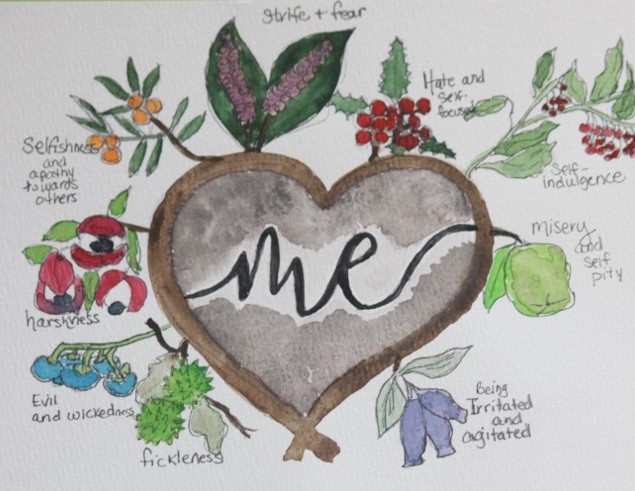
I spent a lot of time in Galatians 5 and John 15. I woke up in the middle of the night with an idea for my next art piece. I googled “poisonous fruit” and noticed something interesting that made me think. The fruit was so pretty. It was colorful, shiny, and appealing to the eye.
I couldn’t help but think about how the world champions “pretty fruit” that is actually noxious to the soul. Social media, TV shows, and even our own hearts urge us to pursue what feels good. They encourage us to win at all costs. We’ve been led to believe that true happiness comes from shiny things we can buy at the store.
We resist boundaries, question the Bible’s guidance on sexuality, and celebrate drama. We speak without filters online and claim instant gratification as our “rights.” In all these ways, we do what feels good in the moment, but we’re not letting the Spirit lead.
When my flesh sits on the throne of my heart, the opposite traits of the Spirit’s fruit sprout. Instead of gentleness, harshness lashes out at unsuspecting targets. Strife and fear rise as peace diminishes. Joy takes a backseat to self-pity, and my appetites are indulged rather than brought under the Lordship of Christ.
But poison, at the end of the day, is still poison—even if it looks beautiful. When I am at the center, my heart darkens. Relationships suffer and disconnection spreads between God, myself, and others. Fickleness trumps faithfulness, while evil triumphs over good. When I am in the driver’s seat, the fruit multiplies with a bumper crop of selfishness. The toxic fruit may all look, feel, and taste different, but ultimately it’s from the same seed.
What a negative list. I don’t know anyone who would willingly choose the fruit of the flesh—and yet, too often, we do.
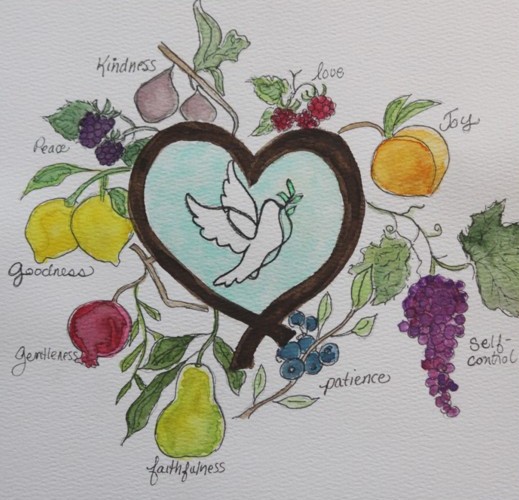
The Second Portrait: The Harvest of the Spirit
As Christians, we are called to live in freedom. That freedom doesn’t come from trying harder to be more loving, patient, or faithful. True freedom comes from abiding in Christ. It requires allowing the Holy Spirit to guide us, especially when our carnal nature wants to rise up. A life surrendered to the Spirit becomes a life marked by virtues that flow through us by His mighty power, not by our willpower.
Who wouldn’t want a life filled with love, joy, peace, patience, kindness, goodness, faithfulness, gentleness, and self-control? Sign me up. That list sounds like heaven on earth. Imagine if everyone in our world bore the fruit of the Spirit—what a difference it would make.
But the reality is that a battle rages within our hearts. Our natural tendency is toward self-centeredness. We often assume that looking out for ourselves will get us the results we want, rather than yielding to God’s way. Yet Scripture reminds us that fruit always flows from the heart—whether that heart is healthy or poisoned.
In John 15, Jesus uses the analogy of a vine and branches to make the point unmistakable: He is the vine, and we are the branches. Any good fruit that we bear is the direct result of staying connected to Him. Apart from Him, we can do nothing. When we dwell in Him, His life flows through us. It produces fruit that we could never manufacture on our own.
A harvest of blessing comes only through continual connection with God. To abide is to dwell, to remain, to live deeply in Him. For me, abiding means looking to God for wisdom and fixing my eyes on Him throughout the day—using both the good and the hard moments as invitations to draw near. It means depending on Him as I walk through life and choosing to see everything through the lens of Scripture, prayer, worship, and humility. I recognize that anything good that flows out of me comes from Him alone.
When I live surrendered to the Holy Spirit, walking in obedience, life overflows with fullness and abundance in my inner being—even when my circumstances aren’t what I would choose. He gives a peace that defies understanding, a calm in the midst of chaos. When I am trusting Him and keeping my eyes fixed on Him, there is nothing better in this world.
We often fall for the lie that we must fend for ourselves. But the truth is that life is best lived when we receive love, joy, and peace from the Lord—and then become conduits of that fruit to those around us.
When we center our lives on the Lord through the Holy Spirit, the fruit that grows is nourishing—not only for us, but for everyone our lives touch.
Next Steps: How do I apply this principle to my life?
Spiritually
Prayer: Confess any ways that you are on the throne of your life asking God to recenter your life on Him. Ask Him to help you abide and obey.
Scripture to Dive Into: John 15, Galatians 5, and Romans 8 with a pen and paper in hand. Ask for the Holy Spirit to illuminate your mind to spiritual truth.
Worship Songs: Ask the Lord to help you sing from your heart agreeing that you want to live for the Lord instead of yourself. Lift your hands and heart to Him. He is worthy of your praise.
Mentally
Ask God to reveal the lies you’ve been believing. Write each lie on a notecard, and right beneath it write the truth that counters it—along with a Scripture verse that anchors that truth.
When that lie surfaces in your thoughts, bring it immediately to the Lord. Renounce the lie, and announce the truth grounded in His Word. This is a practical, powerful way to take every thought captive and make it obedient to Christ. (2 Corinthians 10:4-5)
For example, maybe you’ve believed the lie: “I’ll never be able to change.”
But Scripture declares the opposite. The truth is that we are more than conquerors through Christ (Romans 8:37–38), and He is a mighty warrior who fights on our behalf and delights in us (Zephaniah 3:17).
So when that lie rises up, renounce it—call it what it is—and then announce God’s truth over your life. Remind your heart of what is true, realign yourself with your intentions, and lift your eyes back to the Lord.
We have far more power and authority in Christ than we often recognize or walk in. When we stand on His truth and submit to His Spirit, we step into the freedom and victory He has already secured for us.
In the Resources tab of my website, you’ll find a document labeled “Renounce and Announce.” It explains this practice in depth—how to renounce sin and lies and then announce obedience and truth. It also provides examples of common lies and the Scriptures that combat them. Use it as a guide for your own journey toward freedom and renewing your mind.
Emotionally
Allow yourself to dream of what it would feel like to let go of lies, sin, and the things that pull you down. What would it feel like to live in closeness with your Heavenly Father believing only things that are true?
If that is something you desire, let your emotions lead to the cross. God gives us desires and we can ask Him to align our desires with His.
Relationally
Ask a trusted friend to help you see areas in your life that may be blind spots—places where self has quietly taken the throne. This is not easy. None of us naturally want to hear hard truths, but those are often the very things God uses to sharpen us and shape us to be more like Christ.
If your friend shares something with you, don’t rush to defend yourself or dismiss it. Take it to the Lord in prayer and ask Him to help you discern the measure of truth in what was shared. Invite the Holy Spirit to confirm, refine, or gently correct. Even difficult feedback can become a pathway to growth and freedom.
Physically
When you pray, posture your body in a way that reflects God’s rightful place as your ruler. Physical posture can help align your heart with God. Praying prostrate tells my heart that I am choosing to submit to King Jesus. Lifting my gaze reminds me to fix my eyes on Jesus, the author and perfecter of my faith. Kneeling, lifting my hands, and bowing my head all serve as tangible reminders of who I am seeking.

Leave a comment