I’m a cold plunger.
Last winter, I waited too long to move my portable polar plunge tub into my unheated garage. As the weather cooled, the conditions were perfect. Ice floated on the surface. A thin frozen rim formed around the edges. I didn’t even need to add ice. I know—you already think I’m crazy. Stay with me.
Then one night, the temperature plummeted.
By morning, what had been mostly liquid water had transformed completely. The tub was frozen solid from top to bottom, a thick circular block of ice that wouldn’t budge. I couldn’t get in. I couldn’t drain it. I just stood there frustrated, kicking myself for ignoring the forecast.
My solution? Hot water. Over and over again.
I carried jumbo stockpots from the house, pouring steaming water over the ice for hours. Slowly, stubbornly, the ice cracked, loosened, and finally released its grip. Eventually, the blocks of ice let go and I emptied the tub.
So why am I telling you this story?
Because I see myself in that frozen water.
Water freezes under certain conditions—and so do people.
When fear hits the body, we can experience a literal freeze response. More often, though, we freeze figuratively. We become stuck. Paralyzed. Trapped in mental loops. Unable to move forward when life feels overwhelming or beyond our control.
When I face problems that feel bigger than me, I can freeze in inaction. It’s not that I don’t want change. The path forward just feels completely out of my hands.
That frozen feeling can come from many places: an unwelcome diagnosis, a child making destructive choices, disability, extreme weather, financial stress, relational conflict, loss, or deep grief. Most of us have been there.
Powerlessness is uniquely exhausting.
When outcomes feel unreachable, discouragement settles in. The world looks darker. Problems feel heavier and more permanent. Everything begins to seem impossible.
The truth is, much in this world is outside of my control.
I can’t control other people’s choices or opinions.
I can’t control global events.
I can’t control the past or the outcome of my best efforts.
I can’t control genetics, the economy, or the weather.
But it’s also true that much is within my control.
I can control my response.
I can shape my rhythms and routines.
I can choose what I allow into my mind and heart
I can choose what I do with my thoughts and feelings that don’t serve me well.
I tend to my prayer life and decide how to respond to stress.
I can choose consistency—whether I keep going or give up.
And I can control how I treat people, regardless of how they treat me.
Scripture reminds me of this again and again:
“Rejoice in the Lord always… Do not be anxious about anything, but in every situation, by prayer and petition, with thanksgiving, present your requests to God. And the peace of God… will guard your hearts and minds in Christ Jesus.”
Philippians 4:4–7
I can choose praise instead of worry.
“In everything set them an example by doing what is good.”
Titus 2:7
I can choose not to stoop to their level.
“Rejoice always, pray without ceasing, give thanks in all circumstances.”
1 Thessalonians 5:16–18
I can choose prayer and gratitude.
“Let us not become weary in doing good, for at the proper time we will reap a harvest if we do not give up.”
Galatians 6:9
I can choose to keep going.
Ultimately, I can choose to follow God in the very place that feels most out of my control. I can trust and obey what He’s calling me to, fixing my eyes on Him and believing He has purpose even here.
No matter the circumstance, I can always pray for four things:
- That God would be glorified
- That my character would be shaped to look more like Christ
- That my relationship with the Lord would grow deeper
- That God would use this situation to help me care for someone else
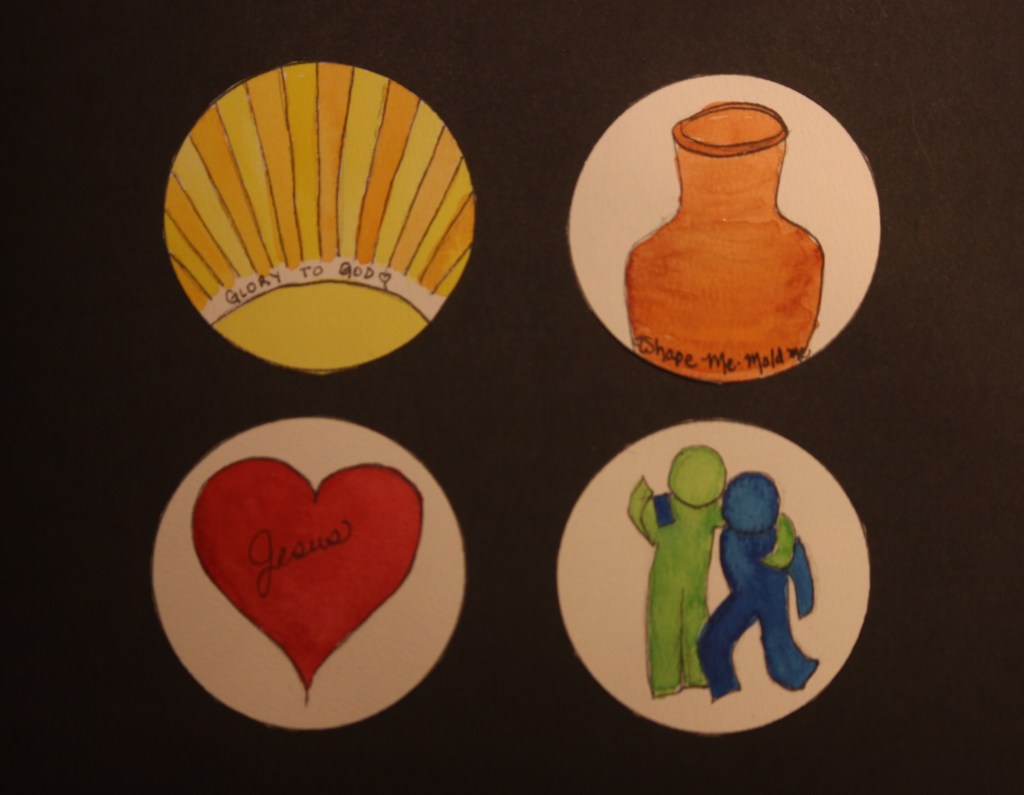
God is Sovereign. He is not surprised by what has come my way. Prayer, coupled with trust, helps me remember that even the things I cannot control can be used for good.
Nothing in life is ever fully in our control—or fully outside of it. When we focus only on what’s beyond us and leave God out of the equation, we can become frozen, like water locked in winter’s grip.
But every intentional step of faith—every prayer, every act of obedience, every choice to trust—adds warmth. cracking the ice slowly, and returning movement. Flow is restored again through the work of the Holy Spirit, even when the outcome is still uncertain. I’m so thankful that God empowers us to take that next step in obedience that brings freedom, life and vitality.
NEXT STEPS
Mental Practices
Draw two columns. Label one “Outside My Control” and the other “Inside My Control.”
Begin by asking the Lord to reveal the things that have been consuming your mind. Invite Him to show you what’s been weighing on your heart, where frustration has taken root, and what you’ve been trying to carry that was never yours to hold. As each concern comes to mind, place it honestly in the column where it belongs.
Then ask God to guide you toward practical steps—small, faithful actions that fall within your control.
I’ve found there’s real clarity in seeing things written out this way. It helps me recognize what I need to hold onto with intention and what I need to release with trust. Often, the act of letting go is where peace begins.
Spiritual Practices
Prayer
Pray through your “Outside My Control” and “Inside My Control” lists. As you do, ask God to help you honor Him in both the releasing and the obeying—in surrendering what you cannot carry and faithfully stepping into what He has placed before you.
Scripture
In addition to the passages above, the following Scriptures are especially encouraging when fear, uncertainty, or overwhelm begin to creep in:
- Psalm 55:22
- Matthew 6:34
- Isaiah 41:10
- John 16:33
- Psalm 118:6–7
Each of these verses reminds us that while circumstances may feel unstable, God’s presence, strength, and care are constant.
Relational Practices
Quiet Your Mind – Find a peaceful space, free from distractions, and take a few deep breaths to settle.
Invite God’s Presence – Begin with a simple prayer, asking for clarity, wisdom, and humility in your relationships. For example:
“Lord, please give me wisdom to see what I can control and what I cannot. Help me respond with love and patience, and guide me to make choices that honor You and the people in my life.”
Reflect on the Relationship – Think about the interactions that are challenging. Ask yourself:
- What is within my control in this relationship?
- What attitudes, words, or actions can I choose differently?
- Where might I need to forgive, listen, or set healthy boundaries?
Listen and Wait – Spend a few moments in silence, open to insight or peace that may come. Sometimes God’s guidance comes as a gentle sense of clarity rather than a sudden answer.
Act with Faith – Identify one small, positive step you can take that is within your control. Even something as simple as choosing patience, speaking with kindness, or letting go of resentment can make a difference.
Physical Practices
Breathwork and other somatic practices help us when we feel stressed and overwhelmed. It slows down your heart rate, reduces stress hormones, helps anchor you to the present and helps you feel more regulated emotionally.
Try out box breathing. Slow your breathing with a 4-count sequence per breath.
- Breathe in for 4 counts – Slowly fill your lungs, feeling your chest and belly expand.
- Hold for 4 counts – Keep the air in, noticing the stillness in your body.
- Breathe out for 4 counts – Release gently and completely.
- Hold with no air for 4 counts – Pause and feel the calm before the next inhale.
Repeat for several rounds
Emotional Practices
Read a list of emotions (feel free to google or check out page 21 of my “Renounce and Announce” document on the Resources tab
If a word pricks your heart, write it down. Keep working through the list noticing what stands out
Spend some time reflecting and praying through the list of emotions that you are feeling asking the Lord to show if any of those emotions are connected to control or lack there of.
Read through the list in the context of the things you can control. Are any new positive emotions rising up for you at the thought of getting unstuck?

Leave a comment