Mountain Dew, Pepsi, Coke, Frappuccino, and Monster energy drinks are essentially liquid refined sugar with a jolt of added caffeine. Hyper-palatable foods and drinks are deliberately engineered to overstimulate our taste buds, They keep us coming back for more. Flavor chemists’ job is to exploit human cravings through loud, exaggerated flavors.
And, we fall for it.
These sugar-laden concoctions dehydrate the body, contribute to disease, spike dopamine, cause tooth decay, lead to weight gain, and wreak havoc on blood sugar—fueling even more cravings.
Now, compare and contrast those sugar-laden drinks with clear, clean drinking water.
Water hydrates.
It supports blood sugar regulation and organ function.
It restores and heals.
It may not be flashy, but it is functional and fortifying.
Now, I’m about to get up in your business.
In our souls, we ingest things just as nutritionally void as Mountain Dew and call it our primary source of hydration—while missing out on the purity of what would actually sustain us.
What do we guzzle down?
We scroll.
We TikTok.
We Facebook.
We Instagram.
We Netflix.
We chat.
We post.
We endlessly watch stunts, outrage, and endless perspectives on YouTube.
Bright colors grab our attention. Hyper-stimulating images feed dopamine loops. We lose track of time as we escape into noise, motion, sound, and the constant pursuit of entertainment. There is no natural stopping point, so we lose hours… days… weeks… months… years—consuming this “sugary substance” that quietly robs us.
Our feeds are tailored to what excites us, what agitates us, what hooks us. The content isn’t neutral—it’s choosing you.
We pay the price, but don’t even recognize it.
Physically: eye strain, brain fog.
Mentally: anxiety, restlessness, depression.
Relationally: diminished human connection and presence.
It takes no effort. It feels good. Our brains equate screens with relief and relaxation.
The statistics are alarming. The average person spends 5–7 hours per day (outside of work) on screens—scrolling, streaming, gaming, shopping, posting. That’s most of our waking life apart from work and sleep.
But we don’t have time to open our Bibles.
We don’t have time to pray.
And you might say, “What I’m watching isn’t bad. I follow Christian accounts. I consume Christian content.”
Our brains—and our hearts—need rest.
Studies show that only 19% of self-identified churchgoers read their Bible daily, and the median time spent is about 15 minutes.
Let those two stats sink in…
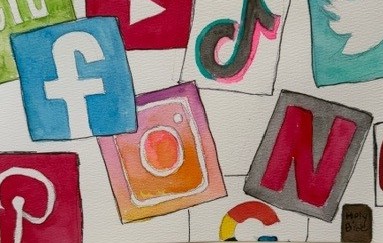
This artwork portrays bold, vivid icons clamoring for our attention. The app logos dominate the page, while a small, unadorned Bible sits in the bottom right corner—easily overlooked unless you’re intentionally searching for it.
How similar is this image to our lives?
Collectively, our lives often mirror that image: the loud, colorful, attention-grabbing things take up most of our visual and mental space—notifications, entertainment, busyness, ambitions, worries. They’re big, bright, and designed to pull our focus.
Meanwhile, the things that truly nourish us—faith, wisdom, health, relationships, quiet reflection—can sit in the “corner.” They’re present and available, but easy to miss unless we intentionally look for them.
Where do we put our attention and priorities and what is the impact or where our attention and priorities go?
It’s like saying, “I don’t know why I don’t feel well,” and then listing your daily intake: Snickers, energy drinks, Pop-Tarts, licorice, Cheetos, ice cream, funnel cake, Oreos, gummy worms. Well of course you don’t feel well with that line-up of things that go down the proverbial hatch.
Then, one day you add a bite of broccoli and wonder why nothing has changed and you aren’t magically healthy and feeling great. (Hint: Searching for the broccoli? You’ll find it right where the Bible was in the picture above.)
Can you imagine how your gut would feel if this were the extent of your nutrition?
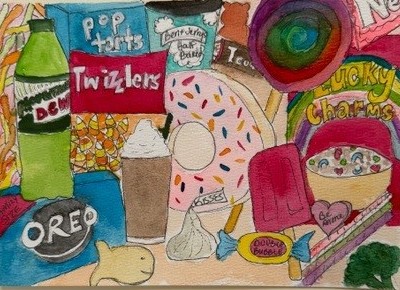
Sit with these two pictures for a moment. What connection do you notice?
We are pouring junk into our minds and hearts—and crowding out what is life-giving.
Our souls are wasting away because there is no quiet, no stillness, no space away from noise and distraction. We were never designed to process this much input.
Stop.
Stop.
Stop.
No wonder anxiety and depression are rising.
“For the word of God is living and active. Sharper than any double-edged sword, it pierces even to dividing soul and spirit, joints and marrow; it judges the thoughts and intentions of the heart.”— Hebrews 4:12
“All Scripture is God-breathed and is useful for teaching, rebuking, correcting and training in righteousness.”— 2 Timothy 3:16
“The law of the LORD is perfect, refreshing the soul. The statutes of the LORD are trustworthy, making wise the simple.”— Psalm 19:7
The Word of God heals. Time spent with God calms our overstimulated nervous system. What about a quiet walk in nature—no podcast, no music, no scrolling?
Do we need more information, or do we need transformation?
I’m not advocating that you throw away your phone or cancel your streaming accounts. Technology itself isn’t the enemy. But there is a snowball effect to constant digital consumption—one that quietly shapes our attention, our habits, and ultimately our souls.
What starts as harmless quickly becomes habitual.
What is habitual eventually becomes formative. But we can reverse that. As a personal testimony, I have not scrolled on social media in well over a year. My overall screentime is significantly less and my life is profoundly better. I’ve got more time for the things that matter. I don’t desire to go back.
Our heads are full—but clouded.
Our souls are struggling to keep up with all the sugar and “digital sugar” we keep pouring in. A dysregulated body makes it harder to hear from God clearly.
So maybe the question isn’t just “What should I stop consuming?”
Maybe it’s also “What would God desire that I consume and will that be life-giving for me?”
What if tomorrow you reached for water instead of sugar—
and for the Word instead of the scroll?
Not to check a box.
Not to perform.
But to be restored.
“Come to me, all who are weary and burdened, and I will give you rest.”—Matthew 11:28
“My people have committed two sins: They have forsaken me, the spring of living water, and have dug their own cisterns, broken cisterns that cannot hold water.”—Jeremiah 2:13
Your soul isn’t starving for more content.
It’s thirsty for living water.
Next Steps: Holistic Application
Okay—maybe you’re feeling convicted and you want to change. The question now is simple: What do you actually do next? Not someday. Not perfectly. But practically today.
SPIRITUAL PRACTICES
There are so many life-giving spiritual disciplines that can help us quiet our souls and turn to God in the quiet.
- Scripture: Read the Word of God. If you aren’t familiar with the Bible, John might be a great book to start with as it tells the story of Jesus.
- Breath Prayer: Breath in slowly praying a name of God and exhale slowly a short phase. A few examples might be, Lord, quiet my heart, Holy Spirit, take control, or Father, help me love. Repeat with each slow breath.
- Unplugging: It’s just what it sounds like. Disconnect from the screens and live unencumbered. You might want to start with an hour or the evening and see where it leads. Some people unplug regularly on the Sabbath so they can seek God without the distractions of a phone, computer or television. I promise… the world will still go on without you.
- Simplicity: It could look like decluttering your schedule or space. Simplicity might be stated as doing less and having less for the purpose of getting to know God more and serving Him with passion and not being distracted by the world.
- Solitude: Getting alone to be with the Lord. I love to pair this with being in nature with the Word of God and to carve out the time for prayer and journaling.
EMOTIONAL PRACTICES
Are you going to social media or streaming to check out emotionally after a hard day?
Are you reaching for the sugar, whether it be a drink, a snack, or “digital sugar”?
If you feel the pull, ask yourself the simple question. “What am I feeling right now?” I’d encourage you to bring it to God. He wants you to come to Him with your feelings.
You could ask yourself, “Is there another thing that will help me in my emotional state other than numbing it?” and see what opportunities that opens.
On the resources tab, there is a document that I created that might be helpful. The emotional portion starts on page 18. Click on the link below.
MENTAL PRACTICES
Here are a few things I’ve used to break the stranglehold of screens. I’m so thankful that God has freed me from digital habits that once stole from me.
- Give yourself a “rule” for the day, where you put the phone to rest. It could be a time period (first hour of the day, after 7pm, etc..). I could be a place (not in the bedroom, not at the dinner table, etc..). It could be when doing an activity, or any number of perimeters. I promise… You’ll be more present. It may be hard at first, but it’s worth it.
- Try making the colors of your phone not pop as much. You can put it on gray scale or adjust the brightness. Wind Down or Bedtime mode can be set, which you can set a schedule for grayscale and other options.
- Try deleting any apps that seem to pull you in. If you aren’t ready to commit to deleting, make it hard to access by hiding it.
- Put time limits on certain apps and actually abide by them :).
- Adjust notifications and/or use different modes (focus, sleep)
- You can pursue other things (like deciding to read through the Bible in a certain period of time, learning a hobby, going on nature walks, reading, getting together with friends, and so much more). Make a list of life-giving things that you want to try out. There is so much we can do apart from screens that bring energy, vitality and vibrancy into our lives.
RELATIONAL PRACTICES
Get an accountability partner or join a small group to study God’s word together. A spiritual friendship is good for the soul. Find a Bible believing church fellowship if you don’t have one. True biblical Christian community is such a blessing.
PHYSICAL PRACTICES
- Take a quiet device-free walk. Listen to nature. Listen to God.
- Nourish and hydrate your body with life giving food and drink. Take a break from the sugar and junk. See what it actually feels like to feel good. Take a second to evaluate how you feel after you eat/drink and how you feel after ingesting “digital sugar” or a life-giving activity. The more you notice and recognize the “new way of life” is life-giving, the easier it is to make changes.
- Turn off the screens an hour or two before bedtime so your body can prepare for rest.
- Wait to engage in “screen life” in the morning. Go for a walk, open your Bible, listen to the birds, paint, drink your coffee, stretch, engage in a conversation… enjoy the beauty of life.
- Breathe… deeply and slowly… Connect with to God with breath prayer.
May the Living Water of Jesus quench your deepest thirst, restore what is depleted, and renew you from the inside out.
https://www.pastors.com/free-resources/new-research-less-than-20-of-churchgoers-read-the-bible-daily
https://www.reviews.org/internet-service/internet-screen-time-statistics/

Leave a comment