This post is part of a series. If you haven’t yet read “A Journey to Health: An Invitation to Walk Through the “Fair” Differently,” you may want to start there. Click the link below to get a better understanding of where we’re headed with this series.
Imagine with me the stage at the county fair. Chaos is abounding in this scenario.
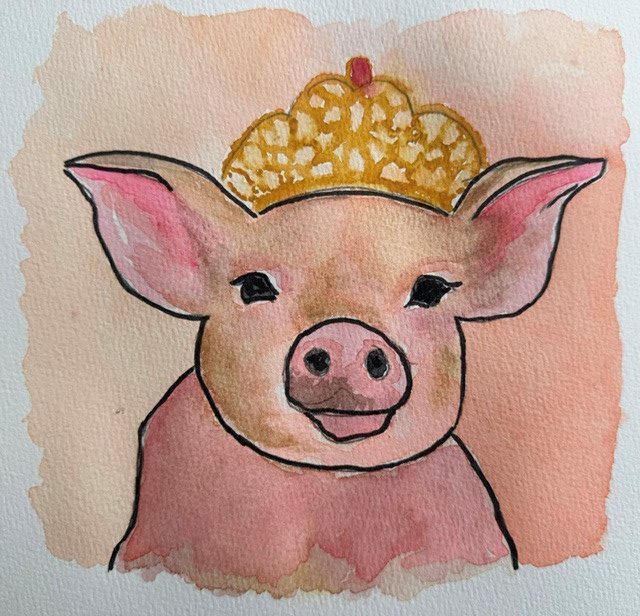
A pig is casually strolling across the stage, apparently expecting to be judged, while the Miss DeKalb County beauty pageant contestants are strutting their stuff in the latest fashions. The country music headliner and his band are trying to perform, but clowns and jugglers keep wandering into the spotlight.
Nothing is where it belongs. Everyone is doing something—but nobody is paying attention to what is supposed to be happening on the stage.
That is what life can feel like when we’re juggling too many responsibilities and priorities. One way we can begin to rein in the chaos is by creating a structure that can help us decide what belongs on the stage—and when.
Psalm 90:12 — “So teach us to number our days that we may get a heart of wisdom.”
That’s what I want to be—wise. And a true heart of wisdom comes from spending time with Jesus and letting Him shape our priorities.
When it comes to taking care of our bodies, rhythms, routines, and habits are key to making lasting change. They’re what help our intentions become part of everyday life. The goal is to make healthy choices a little more automatic. To be clear, automatic doesn’t mean mindless—it means you’ve practiced the habit enough that it requires less effort to follow through.
I’ve found that having a light structure to my day helps me live out my priorities for healthy living. I work from home, and a few years ago, I found myself reaching the end of the day realizing I hadn’t eaten anything, hadn’t had enough water, and hadn’t moved my body. I had simply gotten so wrapped up in my work that the basics of caring for myself had been shoved off into the corner.
I needed some structure—not a rigid schedule that dictated every minute of my day, but a simple rhythm that would remind me to make room for the things I value.
Here is what I came up with: HMNS.
H = Hydrate
M = Movement
N = Nutrition
S = Spiritual
My goal is to weave three HMNS rhythms into my day.
The beauty of HMNS is that it doesn’t have to look the same every day—or even take very long. The four pieces can weave together naturally in one activity, or they can be spread out over the course of several hours.
The goal isn’t to check four boxes at once. It’s simply to create rhythms throughout the day that help me hydrate, nourish my body, move, and connect with God.
It could be as simple as grabbing a water bottle and heading out for a gratitude walk while eating a handful of almonds.
Or maybe I take a lunch break, drink some water, and do a few push-ups, wall squats, or other calisthenics while my food is warming up. While I’m moving, I pray and ask God to help a friend who is going through a difficult time.
Or it could look like spending time reading the Word, followed by a strength-training class. I’m hydrating as I sweat, and afterward I enjoy some complex carbohydrates and protein to replenish my energy.
The goal isn’t to check four boxes perfectly three times a day. It’s to create natural rhythms that help me care for my whole self—body, mind, and spirit—and keep the things I value from getting pushed aside.
HMNS is simply a light structure that helps me remember what matters. It’s not about counting ounces or minutes; it’s about creating habits that help me consistently live out what I value.
Another structural idea that has made a difference in my day is having a rhythm to my mornings and evenings.
Think about the county fair. There is a rhythm to the day. Eventually, the fair closes down. The streets get swept, the animals and people get a chance to rest, and everything gets ready for another day.
Our bodies need rhythms, too. Morning and evening routines can easily incorporate an HMNS rhythm, along with some other practices that have made a real difference in my life.
Sleep and Rest…
Sleep and rest are so important to our overall health. If our bodies aren’t getting enough rest, lack of sleep can undermine the other positive lifestyle changes we’re trying to make.
Sleep is an essential part our lives. Just as we need rhythms for nourishment and movement, we need a rhythm that allows our bodies, minds, and souls to slow down and rest.
For me, that includes creating screen-free space before bed and upon waking. Giving myself some time without the constant stimulation of a screen helps me be more present—to my body, my thoughts, my surroundings, and most importantly, to God.
Rest isn’t wasted time. It is part of caring for the whole person God created us to be.
Mornings…
For years, I would hit the snooze button—over and over and over again. It had become a problem. Then I would scroll on my phone for a while before eventually getting my feet on the floor. It was almost as if I were intentionally delaying the start of my day.
And then, of course, I would be in a rush. My time with God got shortened. There wasn’t time for a workout. Breakfast? Who has time for that?
About two years ago, I decided to make a simple goal: I would not hit the snooze button. When my alarm went off, I would get up.
What a game changer!
Suddenly, I had more time. More importantly, I felt like I was practicing discipline and following through on an intention I had made for myself.
This was also around the time I stopped scrolling social media cold turkey. It was as if my eyes were opened to possibilities I hadn’t been seeing. I began to realize how much of my morning was being given away before my feet even touched the floor.
I developed a little mantra: Mornings are a gift!
And then I would count down:
5… 4… 3… 2… 1.
Feet on the floor.
The hardest part was over.
LIFE-CHANGING. And that is not an overstatement!
I haven’t looked back.
My promise to myself is simple: I don’t hit the snooze button.
Now you might be thinking, What about those random (and rare) days when I don’t have to get up early?
Easy. I don’t set the alarm.
And then I don’t have to hit snooze because there is no alarm!
That’s part of what makes this sustainable for me. My goal isn’t to get up at 6:00 every morning no matter what. It’s not about imposing an arbitrary schedule on myself.
It’s about deciding the night before when I need to get up, setting my alarm accordingly, and then following through on my own intention when that alarm goes off.
For me, that small decision has created a much bigger rhythm: I decide. I set the intention. And then I follow through.
Evenings…
And then there is my evening rhythm.
One of the things I desire is to feel physically hungry somewhere around 8:30 or 9:30 in the evening. That means I don’t want to have eaten such a huge dinner that I’m still stuffed when it’s time for bed.
You know the old saying: Eat breakfast like a king, lunch like a queen, and dinner like a pauper.
There is something about that idea that resonates with me.
My old pattern was very different. If I had spent most of the day working and hadn’t eaten enough, I would arrive at dinner absolutely ravenous. And when you’re that hungry, it’s easy to overeat.
I jokingly call that the sumo-wrestler diet—restrict all day and then eat a huge meal at night. The irony isn’t lost on me. How many of us approach weight loss in a similar way? We restrict and restrict until we can’t stand it anymore, and then we overeat or binge and the results end up going the opposite direction from where I want to go.
That’s not a rhythm I want to live in.
Instead, I want to give my body regular nourishment throughout the day so that dinner can simply be dinner—not a food emergency.
I also enjoy taking an after-dinner walk, gazing at the stars, or doing some gentle stretching to help me wind down for the night.
Our bodies need a chance to shift out of the activity of the day and into rest. This is the time when our bodies can settle into the processes of restoration and repair.
Think about the county fair again. When the crowds go home for the night, the workers don’t keep the rides running and the music blaring. The fair closes down. The streets get swept. Things are cleaned up and prepared for another day.
Our bodies need that kind of rhythm, too.
Morning is a time to wake up and step into the day. Evening is a time to slow down, clean up, and prepare for rest.
The goal isn’t perfection or a rigid bedtime routine. It’s creating rhythms that help my body—and my whole being—do what they were designed to do.
Next Steps: Putting Your Priorities in the Spotlight
Try the light structure of HMNS for one week and see if you notice a difference. And if you’re really up for an adventure, try the “no snooze,” “no scrolling in the morning,” and “nighttime routine” challenges and see how they change your days.
SPIRITUAL
Make a list of all the things you can do to connect with God so that if you try out the HMNS light structure, you have a “menu” of sorts of ways to connect with God.
Hint: These things are called spiritual disciplines if you wanted to research some new ways to connect with God.
EMOTIONAL
If scrolling or snoozing is part of your morning routine, have you ever thought about what might be driving that delay in starting your day?
When you wake up in the morning, do you experience dread or excitement about what the day has to offer?
How can you make choices that might swing that pendulum toward anticipation and excitement?
MENTAL
We’re going to talk about tracking.
I use Silk and Sonder journals each month, and they have been life-changing for me. They have become a mixture of vision, accountability, exploration, and data.
If that feels like too much, or you feel like it would be too big of a step to take with introspection, maybe another form of tracking would be beneficial. I love the Lamare Habit Tracker, which is also included in Silk and Sonder.
My seven categories that I track each month on the circle are:
- No Snooze
- HMNS 1
- HMNS 2
- HMNS 3
- No Alcohol
- Silk and Sonder
- Nighttime Empty by 9:30 p.m.
But you can literally track whatever habit you want.
I used to hang mine in my kitchen as a visual reminder. There are also weekly and monthly goals on this same page, so you can track your habits while also keeping an eye on the bigger picture.
For me, tracking isn’t about striving for perfection. It’s about becoming more aware of what I’m actually doing and giving myself a way to notice patterns, celebrate progress, and make adjustments along the way.
Here are the links for the 2 products that have helped me.
Lamare Habit tracker below
PHYSICAL
A watch can be a great “truth teller” when it comes to movement. Look back at your data with curiosity and notice the patterns. This isn’t about beating yourself up over what you did or didn’t do. It’s about gathering information that can help you make choices that support your goals.
Set some goals for steps or exercise minutes this week. Then lace up your shoes and head out for a walk or run, enjoying God’s beautiful creation along the way.
RELATIONAL
Maybe part of your structure or routine could be getting in a workout with friends, taking a class, or meeting a friend for a walk.
I have a friend who I walk with most mornings on her way to work. She drives, and I walk. It gives me built-in accountability to walk in the mornings from 6:30–7:15 during the school year.
Sometimes You’ve Got to Get Creative!


Leave a comment