This post is part of a series. If you haven’t yet read “A Journey to Health: An Invitation to Walk Through the “Fair” Differently,” you may want to start there. Click the link below to get a better understanding of where we’re headed with this series.
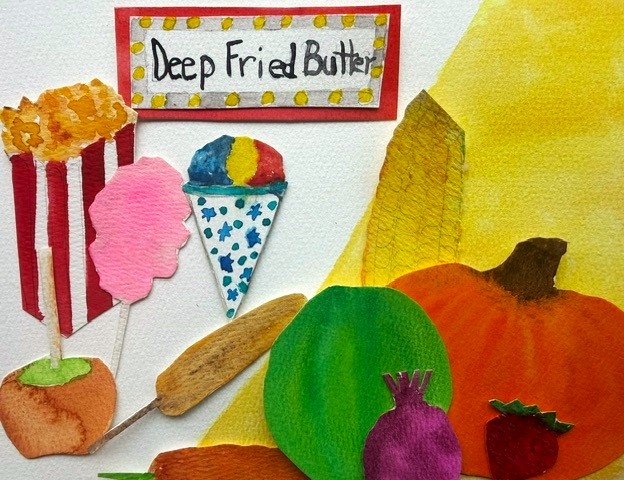
What comes to mind when you think “fair foods?” For me, funnel cakes, corn dogs on a stick, deep-fried Oreos, and of course, cotton candy. There is no end to the creativity of the things that can go on a stick or be deep fried.
But as I followed the mental map of the fairgrounds, there’s such a juxtaposition between the two vastly different types of food. On one hand, you’ve got the once-a-year treats that cause a flavor explosion in your mouth. On the other hand, there are pumpkins, ears of corn, eggs, honey, and other farm-fresh, home-grown fruits of the earth. You couldn’t get more opposite.
In my life, my extremes are not quite as jarring. I don’t have a garden or chickens, and I don’t deep-fry candy bars, but if I look at the continuum of food choices and their nutritional value, I have certainly eaten from the spectrum over the years.
When I’ve been in the obsessing lifestyle, I’ve stayed away from carrots and peas because they are too sweet. And when I’ve swung over to neglect, a deep-fried Snickers sounds like an adventure with maybe some ice cream to go with it.
And so as I’m on this STEWARDSHIP journey, I’m figuring out what that looks like in the realm of nutrition.
There is no doubt in my mind that my body responds better to certain foods. Food fuels my body, and my body gives me feedback.
When sugar is part of my diet, my hands ache. After removing sugar and alcohol over the last few weeks, I’ve noticed that my hands don’t ache anymore. When I eat foods that send my blood sugar on a rollercoaster, my energy dips. That’s data.
When I eat out and have too much fried food, my stomach doesn’t feel right. When my clothes feel tight after eating too much processed food, that’s data, too.
I want to feel good. I want to have energy. I want to feel comfortable in my own skin. Instead of ignoring what my body is telling me, I want to pay attention and learn from it.
For me, that means most of the food I consume either used to have a mother or a father, or it grew from the ground or on a tree. I can pronounce the ingredients, and I’ve prepared the food myself, so I know how it was cooked. And, importantly, the food is kind to my blood sugar rather than sending it on a spike-and-dip rollercoaster.
This is a real thing for me. I’ve learned that my body doesn’t respond well to foods that cause my insulin levels to rise quickly. Paying attention to that response is part of learning to care for my body well.
Notice I said most of the food, not all. The change I’m looking for has to be sustainable. I’ve broken up with “all-or-nothing” thinking, because, in the past, I would swing from obsessing to neglecting the moment I “messed up” by having a treat at the fair or eating some Ben & Jerry’s.
One treat doesn’t have to derail the whole journey. I’m learning that health isn’t about perfection; it’s about consistently making choices that care for the body God has given me. With each healthy choice I make, I’m casting a vote for the person I want to become—a healthy individual who cares for and honors the body God has entrusted to me.
My taste buds have changed, and those sickeningly sweet treats that once sounded so appealing now sound downright gross to me. But if there were something that looked and smelled amazing, food freedom means I could have a few small bites, savor them, and move on.
Emotions are deeply tied to food, and when we feel deprived for too long, we can begin to respond in ways that are devoid of logic and common sense. I don’t want to live in a place of deprivation or fear around food.
God gave us food as a gift to be enjoyed. But I also think it’s worth pointing out that much of what we eat today isn’t really food at all. It’s a chemical concoction designed to mimic food while offering little nutritional value. When I think back to Hebrews 12 and the instruction to “throw off everything that hinders,” I wonder if some of these foods belong in that category.
Would the habit of eating out regularly or eating sugary cereal be a sin? I’d venture to say no. But can those habits become a hindrance to honoring God with my body? For me, the definitive answer is yes.
“Everything is permissible for me, but not everything is beneficial. Everything is permissible for me, but I will not be mastered by anything.” (1 Corinthians 6:12)
I don’t want to be mastered by anything except Christ.
Maybe that’s what it means to walk through the fair differently. The fair will always have food that is tempting, fun, and permissible, but not necessarily beneficial. I don’t have to declare those foods off-limits, but I also don’t have to let them become the main course. I can enjoy a few bites when I choose, while choosing the homegrown, nourishing foods that help my body thrive most of the time. I can listen to the cues my body gives me related to hunger and fullness, but also the signs to whether the foods I like, like me back.
I may not choose health with every choice, and I don’t have to. One choice doesn’t determine the outcome. I can keep casting votes, meal by meal, for the healthy person I want to become.
Next Steps: God’s Gift of Food
SPIRITUAL
Pray over your patterns, not just your meals. Ask God to reveal the habits, emotions, and beliefs underneath your food choices. The goal isn’t simply changing what is on your plate but allowing God to transform your relationship with food and listening to your body (with the help of the Holy Spirit.)
EMOTIONAL
Invite God into your cravings. When you really want something, pause before automatically reaching for it. Ask yourself, “What am I actually looking for right now?”
Sometimes the answer is to satisfy hunger, but sometimes it might be comfort, celebration, stress relief, or reward.
Whatever you discover, bring it to God. Talk to Him about what you’re feeling and what you’re craving. Ask Him to meet you in that place and show you what you truly need. Let the craving become an invitation to connect with God rather than simply a cue to eat.
MENTAL
Reflect on “permissible” versus “beneficial.” Use 1 Corinthians 6:12 as a question to carry with you: “Is this beneficial for me? Is this becoming something that masters me?”
Spend some time journaling about the similarities and differences between what is permissible and what is beneficial. Where might something be permissible but not beneficial in your own life? Ask God to give you wisdom and discernment as you consider the choices you’re making.
PHYSICAL
Build your plate around real food. Start with protein, vegetables, fruit, healthy fats, and minimally processed carbohydrates rather than beginning with the most convenient packaged option. Then enjoy your food with all your senses. Notice the vibrant colors, interesting textures, enticing aromas, and delicious flavors. We have so much to be grateful for in the incredible variety of foods God created for us to enjoy and nourish our bodies.
You may want to keep a food log. For me, I keep track of not only what I eat, but whether I was physically hungry when I ate it. I also find it helpful to notice how I feel after eating.
We are each uniquely made, and nutrition is not a one-size-fits-all thing. What works well for one person may not work the same way for another. Part of this journey is learning to pay attention to your own body and discovering what helps you feel nourished, energized, and well—and, just as importantly, noticing what leaves you feeling sluggish, depleted, or unwell.
Be curious. Rather than judging your choices, start paying attention to the signals your body is giving you.
One idea might be to write down some of those symptoms or signals at the beginning of this journey. Then, as you make changes, you can look back and notice how your body is responding to the fuel you’re giving it.
Here’s a helpful link that explores some of the ways our bodies may be communicating with us—both through signs of wellness and signs that something may need our attention.
RELATIONAL
Invite someone into the journey. Find a friend or family member who wants to make healthier choices and invite them to join you. Cook a meal together, visit a farmers market, try a new healthy recipe, or take a walk after dinner. Share what you’re learning about how different foods affect your body and encourage one another without judgment. Health doesn’t have to be a solo journey. We were created for relationship, and sometimes having someone beside us makes it easier to keep choosing what is beneficial.

Leave a comment