Humans are drawn to things that sparkle and shine. Whether it’s a young child pestering Mom for a cheap imitation diamond ring from a toy capsule vending machine, or the Forty-Niners panning for gold, the pull toward what glitters seems universal. South African diamond mines, archaeological treasures like King Tut’s gold death mask, and the crown jewels of the British monarchy all highlight a consistent theme: nearly every culture has prized precious gems and metals.
Though meanings may differ from place to place, gold, diamonds, rubies, and pearls have long been associated with power, status, beauty, and wealth. We are, in many ways, hard-wired to notice brilliance and attach significance to it.
God created beauty and delights in splendor. His fingerprints are seen in majestic mountains, vast seas, and even in the gemstones and precious metals hidden deep within the earth. Throughout Scripture—from Eden to the priesthood to the New Jerusalem—precious gems and metals are used to point to God’s glory and presence. Yet the treasures we prize most are only faint reflections of a far greater reality. And in God’s economy, the stuff we lock in vaults and display behind glass is so ordinary that it’s used for pavement.
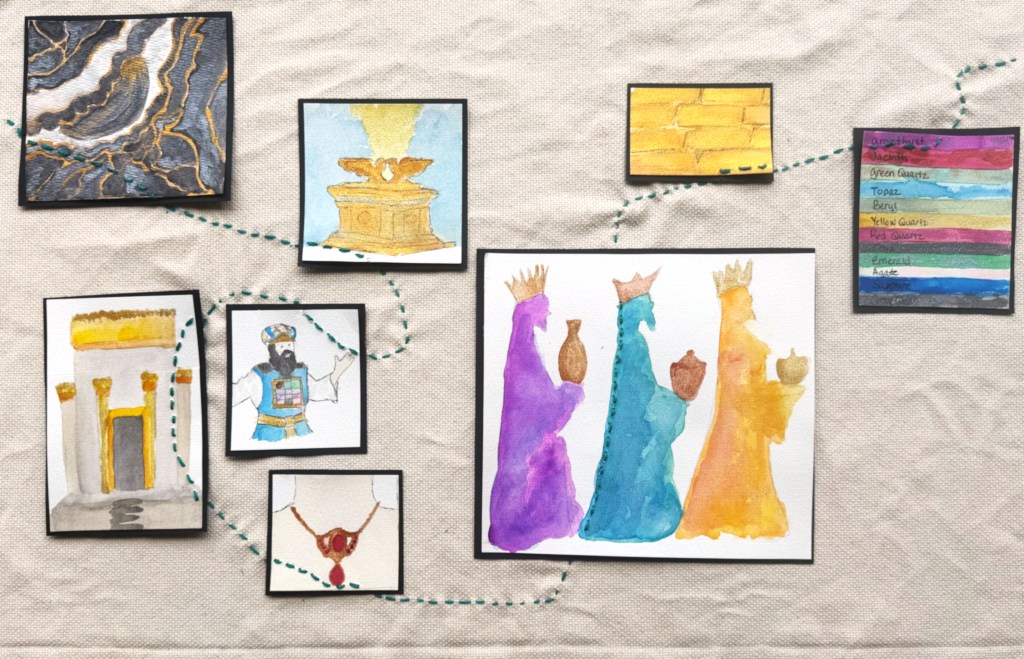
One of the most surprising threads that I discovered on my quest to uncover connections between the first two chapters of the Bible and the last two chapters was recurring theme of jewels and precious metals. Like a vein of gold running through Scripture, this thread weaves it way from Eden to the breastplate of the high priest and ultimately to the New Jerusalem. Let’s follow where this sparkling thread carries us.
Genesis 2 speaks of the garden of Eden, “A river flowed out of Eden to water the garden, and there it divided and became four rivers. The name of the first is the Pishon. It is the one that flowed around the whole land of Havilah, where there is gold, and the gold of that land is good; bdellium and onyx stone are there.” (Genesis 2:10-12)
The Garden of Eden was not only lush with greenery; it was rich with treasures that would one day carry great earthly value, long before money even existed. God specifically notes that the gold in the land was good—pure and of high quality.
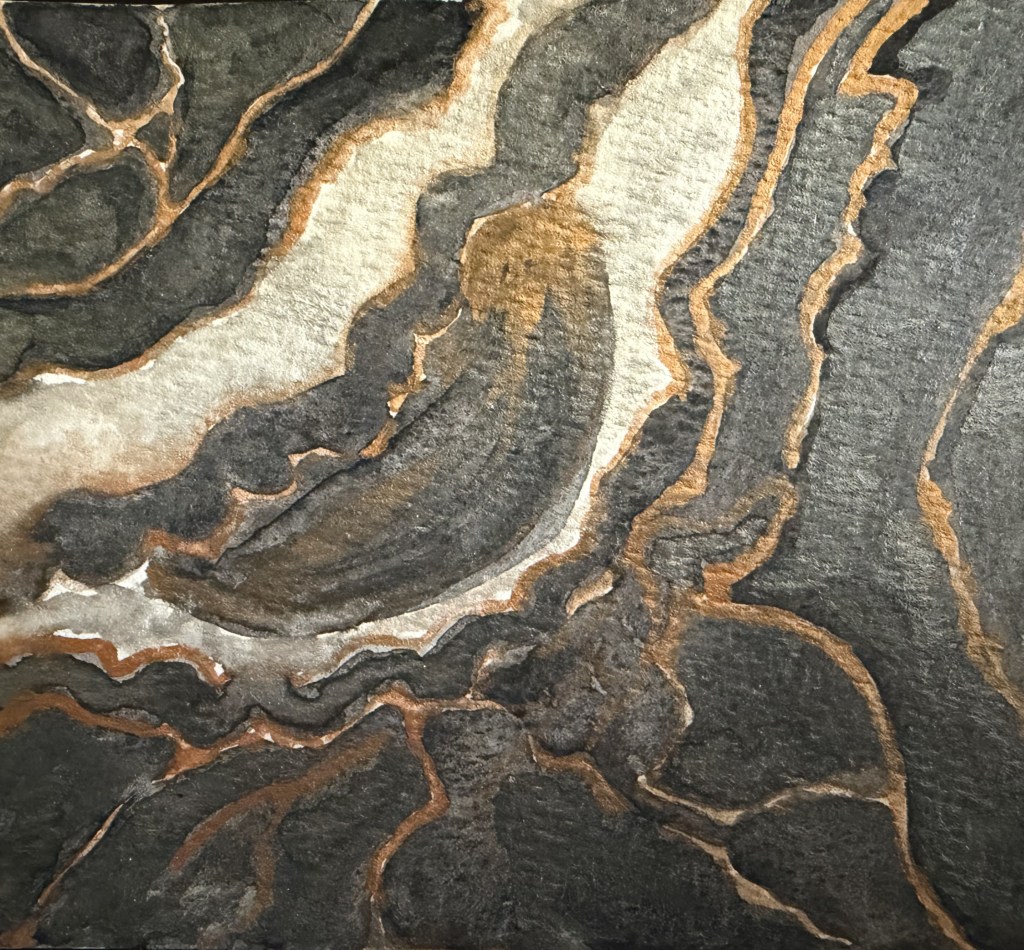
He also mentions onyx stones. That detail may seem insignificant at first, but onyx resurfaces later many times in the biblical narrative. Two onyx stones set in gold filigree were engraved with the names of the twelve tribes of Israel and were mounted on the shoulders of the high priest. As he ministered before the Lord, he symbolically bore the names of God’s people in His presence. We will encounter onyx again as we trace this glittering thread through Scripture, ultimately finding its fulfillment in Jesus, our Great High Priest, who forever carries His people before the Father.
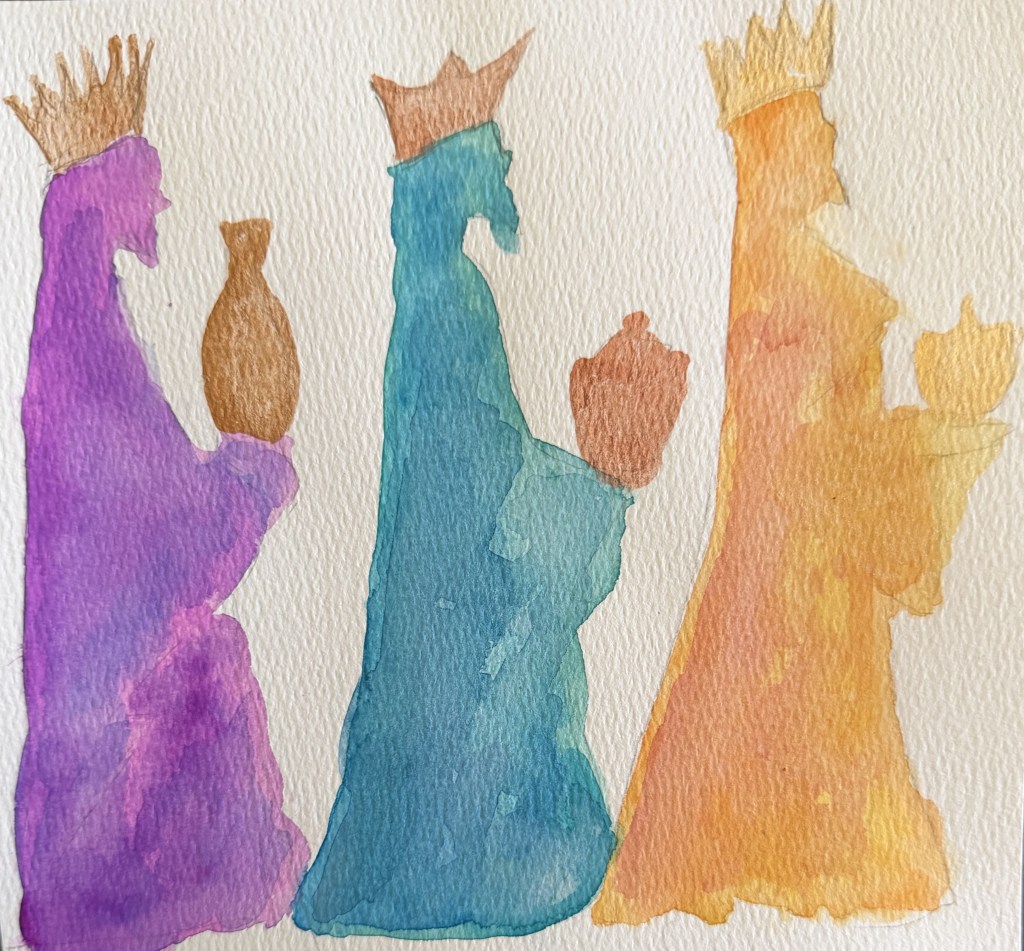
God also highlights bdellium. Most scholars believe it was a precious aromatic resin, similar to myrrh or frankincense. If so, that little thread leads in some interesting directions. Fragrant resins later became part of Israel’s worship and sacrificial system, and the Lord likens the prayers of His people to incense rising before Him. The wise men brought gifts of gold, frankincense, and myrrh to the Christ child, and in Revelation heavenly bowls of incense are identified as the prayers of the saints. Though bdellium itself is never mentioned again in the New Jerusalem, the themes of worship, prayer, and the sweet aroma of God’s presence continue throughout Scripture.
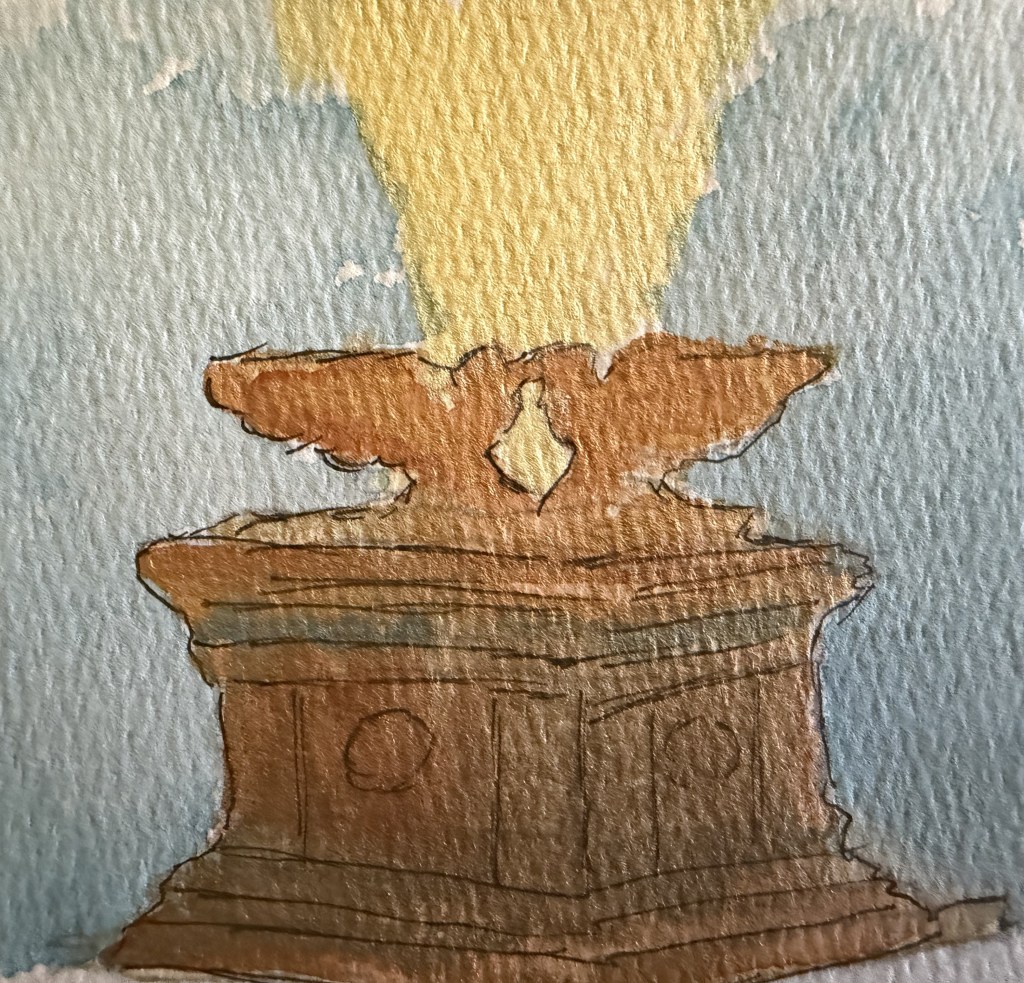
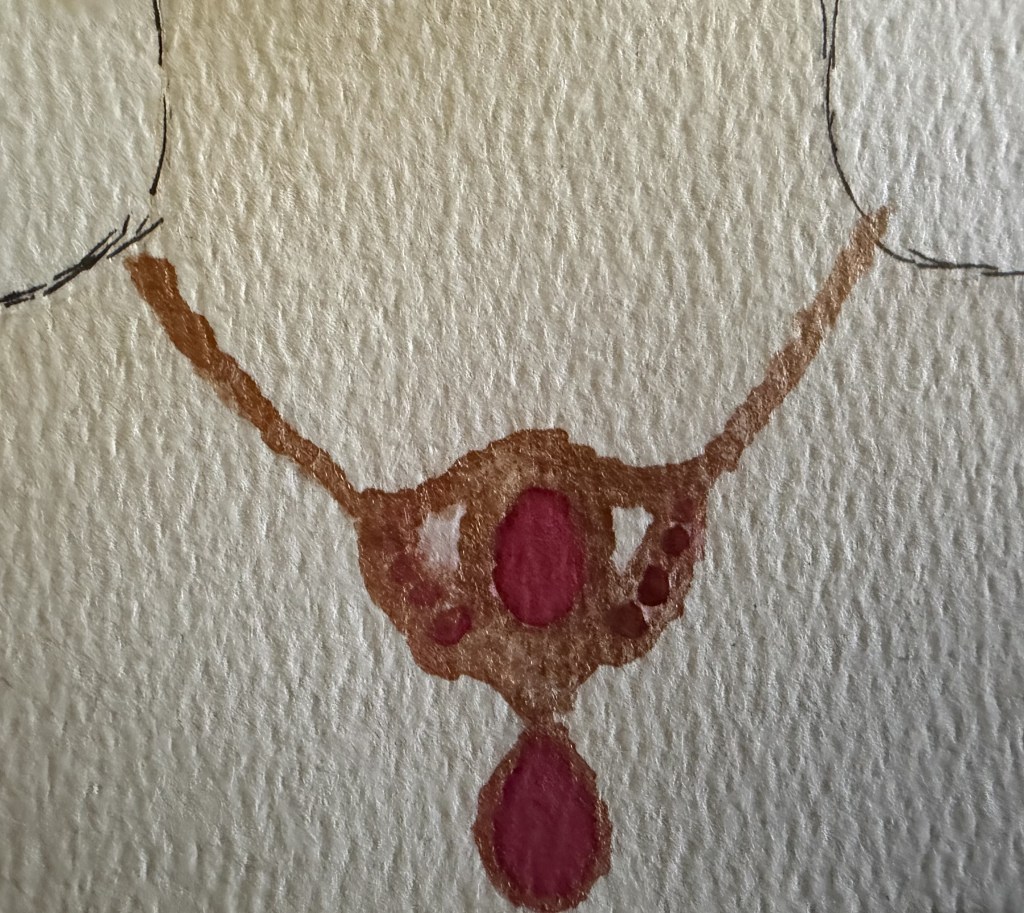
Before the temple was built, the Israelites worshiped in the Tabernacle, where priests served as mediators between God and His people. Their place of worship and the articles used in worship were crafted from the finest materials—gold, silver, bronze, and precious gems. The high priest wore a breastplate over his heart embellished with twelve precious stones, each engraved with the name of one of the tribes of Israel.
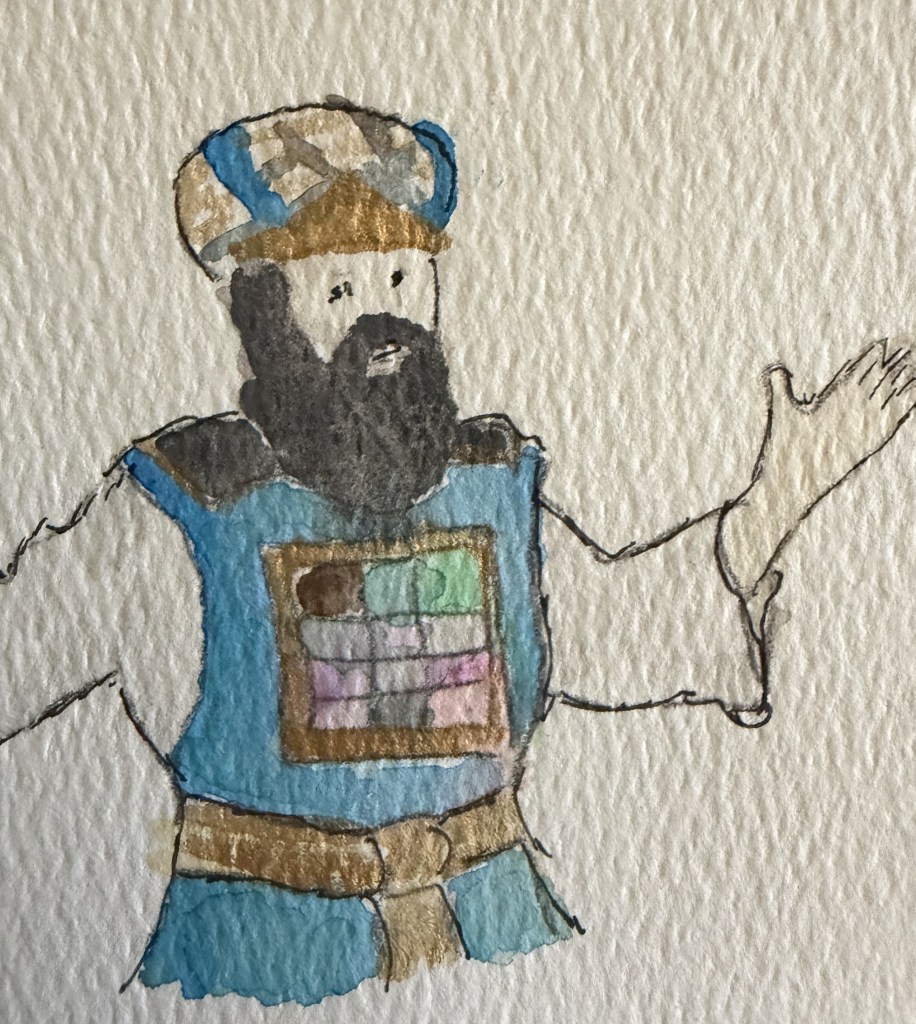
Their place of worship and the articles used in worship were crafted from the finest materials—gold, silver, bronze, and precious gems.
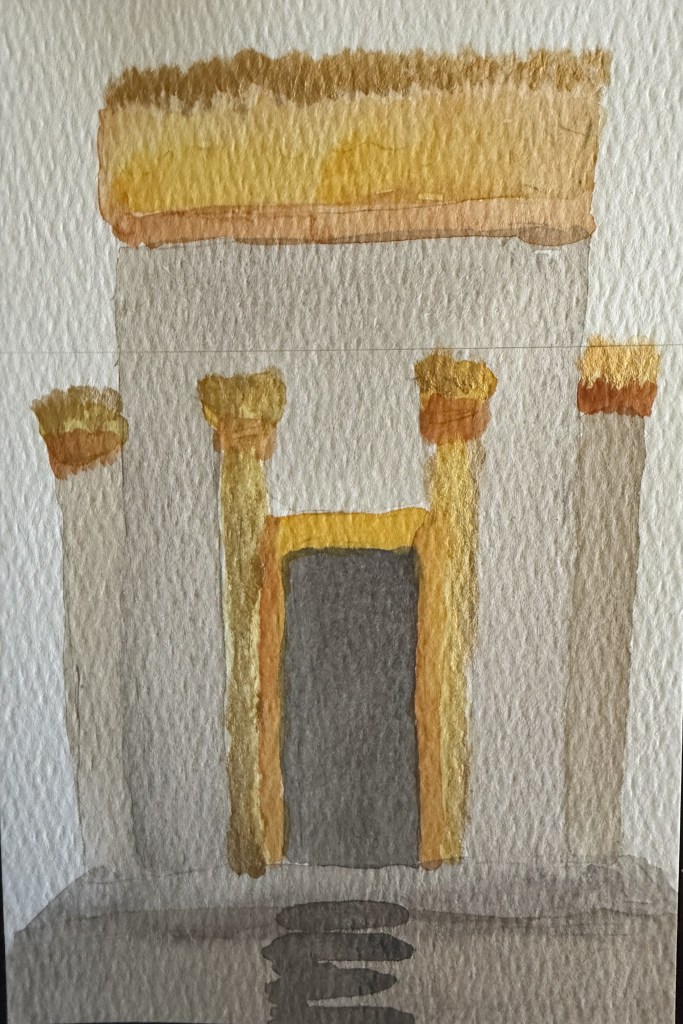
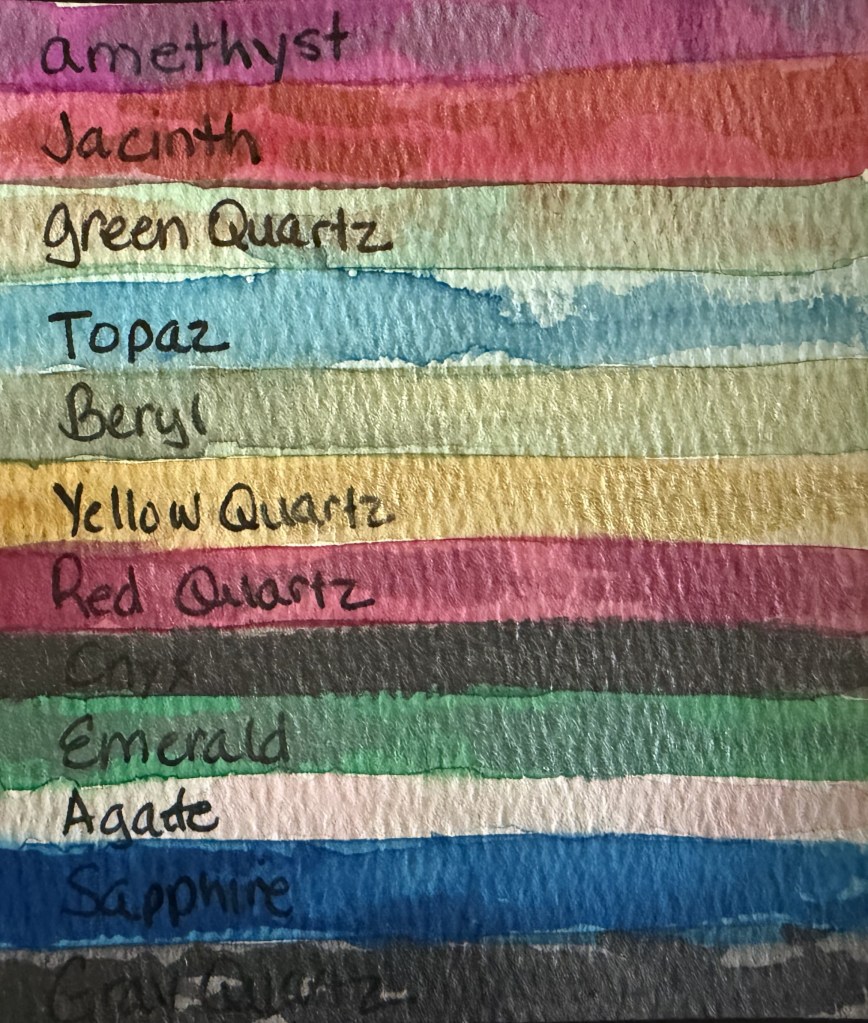
I love the numerical threads woven throughout Scripture, and we see one here as well. Twelve stones in the high priest’s breastplate, twelve foundation stones in the New Jerusalem, and twelve pearly gates correspond to the twelve tribes of Israel and the twelve apostles. Throughout the Bible, the number twelve symbolizes God’s covenant people and His divine order. The gates of the eternal city bear the names of the twelve tribes, while its foundations bear the names of the twelve apostles, beautifully portraying the unity of God’s people under both the old covenant and the new.
The book of Proverbs compares wisdom to the best of what the earth has to offer. “For wisdom is better than rubies, and all the things one may desire cannot be compared with her.” (Proverbs 8:11)
“If you seek her as silver, and search for her as for hidden treasures, then you will understand the fear of the Lord and find the knowledge of God.” (Proverbs 2:4-5)
Scripture repeatedly reminds us that while earthly treasures are beautiful gifts from God, the greatest treasure is knowing and walking in the wisdom that comes from Him. Ultimately, that wisdom is found in Christ Himself. Jesus is our Great High Priest and King, the precious Cornerstone upon which God’s people are built, and the One “in whom are hidden all the treasures of wisdom and knowledge” (Colossians 2:3).
Jesus received gifts from the Magi—gold, frankincense, and myrrh—as a small child. In a beautiful way, Jesus becomes the bridge between the jeweled breastplate and the jeweled city. He is both King and Great High Priest, seated on the throne of God. As King, He rules and reigns with all authority. As High Priest, He represents us before God the Father. And He is seated—the sacrificial work is finished, and He reigns forever.
“Now the main point of what we are saying is this: We do have such a high priest, who sat down at the right hand of the throne of the Majesty in heaven, and who serves in the sanctuary, the true tabernacle set up by the Lord, not by a mere human being… But in fact the ministry Jesus has received is as superior to theirs as the covenant of which He is mediator is superior to the old one, since the new covenant is established on better promises.” (Hebrews 8:1–6)
Yet above every precious stone stands Jesus Himself—the living Stone, the chief Cornerstone—upon whom God’s entire spiritual house rests.
As we walk through this life, we are being sanctified, which means we are being shaped in faith and obedience. The hard things we go through refine us as fire refines precious metals. The heat removes impurities if we allow God to remove the dross—our imperfect reactions and sin. Job expressed this hope in the midst of suffering: “But He knows the way that I take; when He has tested me, I will come forth as gold.” (Job 23:10).
The final pages of Scripture point to the new heaven and new earth. The New Jerusalem represents the Holy of Holies—God’s dwelling place with His people. No longer does only the high priest enter once a year; now all who belong to Christ are brought fully into God’s presence. Jesus paid it all with His perfect sacrifice. He is both the sacrifice and the Priest who offered it.
In Revelation, the city itself reflects overwhelming glory: jasper-like radiance, streets of pure gold, gates of massive pearl, and foundation stones adorned with precious gems—many of which echo the high priest’s breastplate. Opulent, lavish, majestic, radiant, ornate, brilliant, royal, and pure barely begin to describe it. It will be more beautiful and breathtaking than we can comprehend—unspeakably glorious, overflowing with splendor. And for those who know Jesus as Savior and Lord, it is home.
I love that God delighted to lavish Adam and Eve with abundance and the very best of His creation. These treasures are singled out in Eden, echoed in the tabernacle and temple, woven into the garments of the priesthood, connected to the ministry of Jesus, and reflected in the splendor of the New Jerusalem. Yet all of these riches point beyond themselves to something infinitely greater.
Even more valuable than these natural treasures is the greatest gift of all: a close, intimate relationship with God and the privilege of dwelling in His glorious presence. Gold and gemstones have adorned sacred places throughout history, but God’s fellowship is the true jewel.
Next Steps: Practical Application
Spiritual Practices
Proverbs 3 is rich with language that urges us to see wisdom as more valuable than any earthly treasure. Take time to slowly immerse yourself in this chapter. Read it several times. Pause over the phrases that stand out, and ask the Lord to impress His truth upon your heart.
True wisdom flows out of a relationship with the Lord and the indwelling presence of the Holy Spirit—a gracious gift from God. To be wise is not merely to possess knowledge or make good decisions. It is to be centered on God’s will, yielded to His leading, and eager to seek Him throughout every season of life. As Proverbs 9:10 reminds us, “The fear of the Lord is the beginning of wisdom.”
Biblical wisdom is often countercultural. The world tells us to pursue whatever brings us pleasure, accumulate as much as we can, and make ourselves the center of our own story.
God’s wisdom calls us to something far different. It invites us to trust Him instead of ourselves, to surrender rather than grasp, and to live each day as faithful ambassadors of Christ. It teaches us that the richest life is not found in acquiring more, but in walking closely with the One who is the source of all wisdom.
As you read Proverbs 3, keep your journal nearby and prayerfully consider these questions:
- What does this chapter reveal about God’s character?
- What does it teach me about true wisdom?
- What promises does God make to those who trust and obey Him?
- Where am I relying on my own understanding instead of trusting the Lord?
- What areas of my life have I not fully surrendered to God?
- How does God’s definition of wisdom differ from the world’s?
- What practical step of obedience is God asking me to take?
- Which verse do I want to memorize or carry with me this week?
- How can I intentionally seek God’s wisdom in my decisions, relationships, and daily routines?
Journal any insights, convictions, questions, or encouragement the Lord brings to your heart. Don’t rush through the chapter. Read it slowly, meditate on it, and allow God’s Word to shape both your thinking and your living.
Emotional and Mental Practices
Jewels represent great value and worth. As you’ve studied the precious stones of Scripture, have you considered your own worth in God’s eyes?
Do you ever struggle with believing you are valuable? Or maybe you find yourself trying to prove your worth through accomplishments, appearance, success, or the approval of others. I know I do.
Our human tendency is often to swing between two extremes. We either puff ourselves up, believing we need to elevate ourselves, or we tear ourselves down, believing we have little value. I’m going to tell you right now that neither option reflects God’s truth.
When we truly know Jesus, we discover that our worth isn’t found in pride or self-deprecation. Instead, it is found in humility—in recognizing who God is and who we are before Him. We place Him on the throne where He belongs and gladly take our rightful place as His beloved creation. We don’t have to exalt ourselves above others, nor do we have to diminish ourselves. We simply align our hearts with God’s truth.
God created me in His image, and what He made was good. Yet I am also a sinner in desperate need of His grace. In His great love, He considered me valuable enough to send His one and only Son to die in my place so that I could receive forgiveness, abundant life, and the promise of eternity with Him.
My worth is not determined by what I accomplish, what others think of me, or even how I feel about myself. My worth is defined by my Creator. And as I worship Him, walk in obedience, and join His mission of making His love known to others, I begin to understand my true identity and immeasurable worth.
Journal Reflection:
- Where have I been looking for my worth apart from God?
- Which extreme am I more prone to—pride or self-deprecation? How does that play out in my life?
- How does the cross reshape the way I view my value?
- What would change in my daily life if I truly believed my worth was settled by God’s love and not by the opinions of others?
Relational Practices
One of the greatest ways we can reflect God’s wisdom is by speaking life into the people He places in our path. Wise, life-giving words have the power to encourage weary hearts, strengthen faith, and remind others of the value they have as image-bearers of God.
Ask the Holy Spirit to open your eyes to someone who needs encouragement. Notice areas where they are growing in Christ, faithfully serving, persevering through hardship, or displaying godly character.
Then take the next step: tell them.
Your words may be exactly what God uses to strengthen them for the journey.
Physical Practices
Put on your tennis shoes and head outside. Leave your phone behind. Skip the music and podcasts. Remove the distractions. Let it be just you and God.
As you walk, talk with the Lord about an area where you need His wisdom. Maybe you’re facing a difficult decision, wrestling with emotions you can’t seem to shake, or navigating a relationship that needs healing. Bring it all to Him. Scripture promises that He gives wisdom generously to those who ask.
But remember, prayer is meant to be a two-way conversation.
Too often we pour out our requests and then rush on with our day without taking time to listen. Wisdom grows not only from speaking honestly with God but also from quietly positioning ourselves to hear His still small voice.
As you walk, alternate between talking and listening. Share your heart with Him, then spend several minutes in silence. Pay attention to what Scripture He brings to mind, the gentle promptings of the Holy Spirit, or the peace and clarity He may begin to cultivate within you.
God often speaks in the stillness.

Leave a Reply