
The Fourth of July 2026 was a day of unforgettable highs and daunting lows—both involving water.
The highs? Spending the day with family at the river, soaking up everything a hot summer day has to offer. As darkness settled in, fireworks burst overhead, their brilliant colors shimmering across the calm water. It was one of those rare days when time seemed to slow down—a day so full of joy, laughter, and gratitude that you wish you could bottle it up and relive it again and again.
The lows? While we were enjoying the sunshine, unbeknownst to us, our basement became the unfortunate destination for some of the overflow from the town’s overwhelmed storm and sewer system. Sixteen inches of foul, sewage-laden water filled our finished basement, destroying walls, furniture, and nearly every essential home mechanical system and appliance. It was an overwhelming mess and definitely not something we’d want to bottle up.
Water is a symbol of life, renewal, cleansing, provision, and blessing throughout Scripture.
The theme of water flows throughout the Bible. Its first mention appears in Genesis 1:2, where the Spirit of God is hovering over the surface of the waters. Then, in Genesis 2:10, we learn that a river flowed out of Eden to water the garden God had planted. It sustains physical life while also pointing us to the spiritual life that can only be found in God.
But much like the two sides of my Fourth of July experience, water in Scripture has another side. While it often symbolizes life, renewal, and blessing, it can also represent the other side of the coin.
Water also can represent God’s judgement.
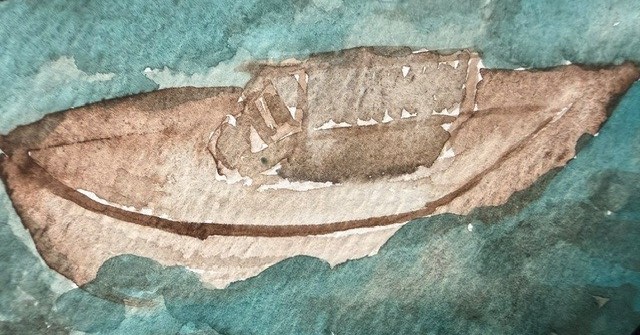
We see this in Noah’s flood, where the waters judged a sinful world while preserving Noah and his family safely in the ark. We see it again when the Egyptian army was swallowed by the Red Sea after pursuing the Israelites. We also see it in the story of Jonah, who was thrown into the sea because of his disobedience. In each of these accounts, water became an instrument of God’s judgment, yet His mercy and redemption were never far behind. Even in judgment, God was accomplishing His redemptive purposes.
Water also carries the theme of purification.
Throughout the Old Testament, ceremonial washings were about far more than removing physical dirt. They pointed to God’s holiness and humanity’s need to be made clean before Him. The Law contained specific instructions for those who had become ceremonially “unclean.” Numbers 19, for example, describes washing clothes and bathing as part of the purification process. These outward acts symbolized an inward reality: God’s desire to cleanse His people and set them apart for Himself. The water of cleansing served as both a physical and spiritual reminder that only God can truly make us clean.
One of my favorite passages in the Bible is Jeremiah 2:11-13. “Has a nation ever changed its gods? (Yet they are not gods at all.) But my people have exchanged their glorious God for worthless idols. Be appalled at this, you heavens, and shudder with great horror,” declares the Lord. “My people have committed two sins: They have forsaken me, the spring of living water, and have dug their own cisterns, broken cisterns that cannot hold water.”
In the desert, it would be absolutely ridiculous to go through all the work of building a cistern when there is a spring of living water right beside you. A spring provides clean, pure, fresh water that continually flows. Why would anyone ignore that and choose a stagnant pool instead?
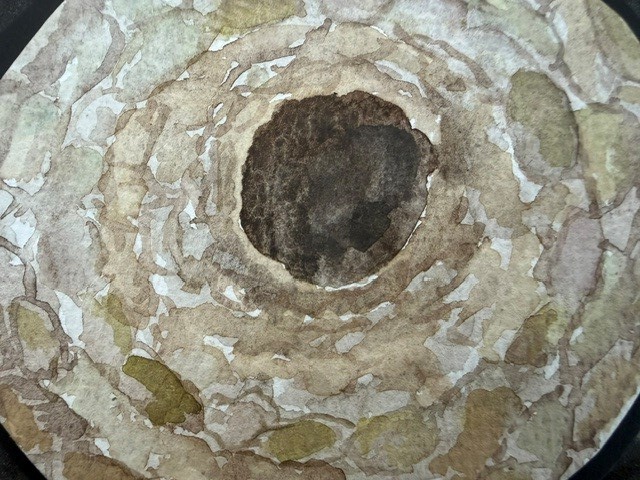
It is even more absurd to depend on a broken cistern with cracks that can’t even hold water when a life-giving spring is freely available. Yet that is exactly the picture God paints in Jeremiah 2:13. His people had abandoned Him, “the fountain of living water,” and dug for themselves broken cisterns that could hold no water.
This is also a picture of us.
We search everywhere for satisfaction except in the One who created us to find our satisfaction in Him.
We run to money, believing that one more raise, one more investment, or one more possession will finally be enough. Yet how often do we see wealthy people who have everything money can buy but possess little joy? Then we meet believers in places like Haiti who own almost nothing by the world’s standards, yet radiate a joy and contentment that cannot be purchased. Money promises security but can never satisfy the deepest thirst of the human soul.
We run to people, only to discover they disappoint us. We run to our careers to give us significance. We chase entertainment, pleasure, accomplishments, and recognition. We trust our retirement accounts until the market crashes. We even begin to love God’s gifts more than God Himself, the gracious Giver.
None of these things are inherently wrong. They simply were never designed to bear the weight of our souls. They are temporary, fragile, and ultimately unable to provide lasting meaning or purpose. Five minutes into eternity, the things we spent so much of our lives chasing will have vanished like smoke.
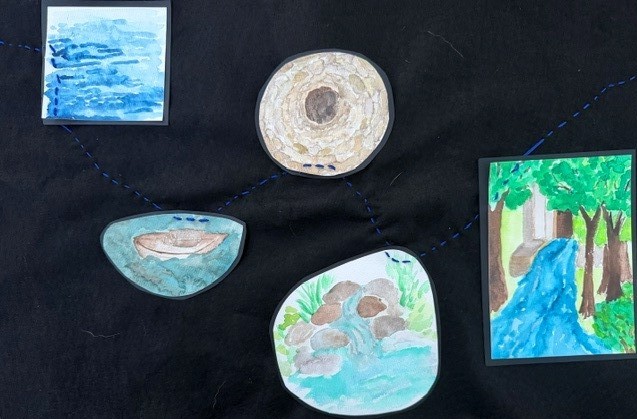
There is another way to find water in the desert—a well. Wells require tremendous effort. Someone must know where to dig, gather others to help, and labor until they reach water, hoping they chose the right place. A well is better than a cistern, but it is still not the same as a spring.
Both wells and cisterns depend on human effort. A cistern depends on collecting water that has already fallen. A well depends on successfully reaching water hidden beneath the surface. Both can fail. Both can run dry. Both picture the exhausting pursuit of trying to satisfy our souls through our own efforts or through the things this world offers.
But a spring is different.
A spring is alive. It continually flows because its source is deeper than anything human hands could create. It does not depend on yesterday’s rainfall or today’s effort. It simply pours out life.
God is that spring.
He alone satisfies the deepest thirst of the soul.
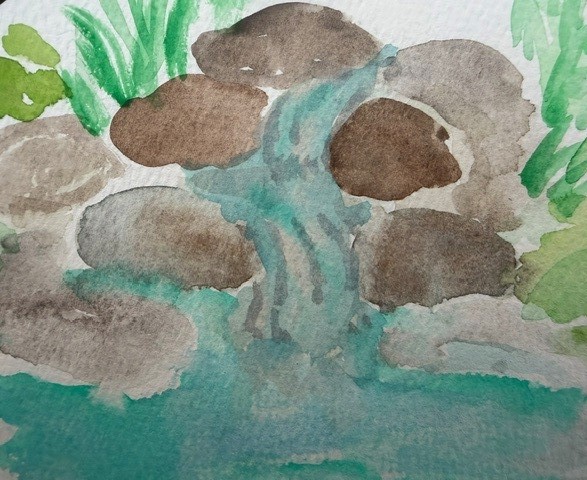
Through Christ He offers the living water of salvation and gives us His Holy Spirit to dwell within us. Jesus declared, “Whoever drinks of the water that I will give him shall never thirst” (John 4:14). Later He cried out, “If anyone thirsts, let him come to Me and drink” (John 7:37). Those who come to Him don’t merely receive enough water to survive—they become channels through which His living water flows to others.
Why settle for broken cisterns when the Fountain of Living Water invites us to drink freely?
When the Holy Spirit lives within us, that living water doesn’t stop with us. In John 7:38, Jesus said that “rivers of living water” would flow from the hearts of those who believe in Him. As God continually fills us, His life naturally overflows into the lives of others.
People notice the difference when someone walks through hardship with genuine peace, hope, and joy. They see a life that isn’t sustained by circumstances but by a deeper Source. Our lives can point thirsty people to the One who alone satisfies—the free-flowing, abundant, life-giving Spring of Living Water.
As believers, the outward symbol of this inward transformation is baptism. Going down into the water pictures our identification with Christ in His death, burial, and the washing away of our old way of life. Rising out of the water symbolizes being raised with Christ to walk in newness of life. Baptism does not save us, but it beautifully proclaims that we have found the only Source of life that never runs dry.
Water from the Temple and the Throne of God
One of my favorite pictures of water in Scripture is found in Ezekiel 47. The prophet sees water flowing from the temple of the Lord. At first it is only a trickle. Then it becomes ankle-deep, then knee-deep, then waist-deep, until it grows into a mighty river so deep that no one can cross it.
I love this picture of life and vibrancy flowing from the presence of the Lord. When we are connected to Jesus—the true Source of Living Water—we discover purpose, meaning, and the abundant life He promised (John 10:10). Left to ourselves, our souls are barren and lifeless, like the Dead Sea before the river reached it. But when Christ’s living water flows into us, He transforms what was dead into something flourishing. His life doesn’t merely sustain us—it overflows from us, bringing refreshment and hope to a thirsty world.
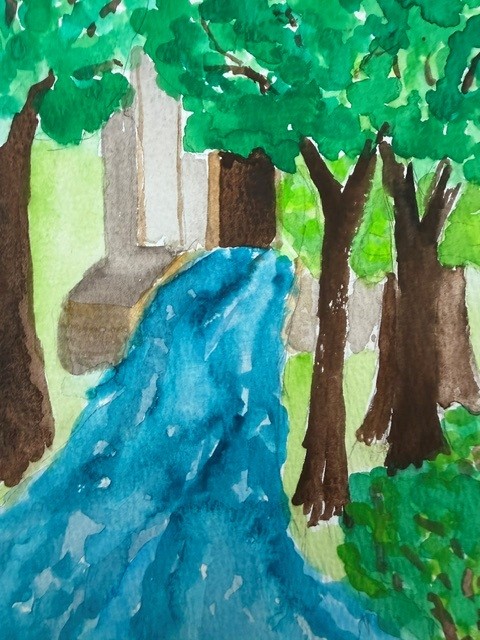
As with so many of the threads woven throughout Scripture, the theme of living water finds its glorious culmination in the New Heaven and the New Earth. In Revelation 22, John sees the river of the water of life, clear as crystal, flowing from the throne of God and of the Lamb. Much like the vision in Ezekiel 47, this river brings life wherever it flows. The Tree of Life grows along its banks, yielding fruit in every season, and its leaves are for the healing of the nations.
Jesus is the true Living Water. He satisfies our deepest thirst today through the gift of salvation and the indwelling Holy Spirit, and one day we will dwell forever in His presence, where the river of life flows eternally from His throne.
The invitation that echoes throughout the threads of Scripture remains the same: Come and drink.
Next Steps: Practical Application
Spiritual Practices
Spend some time with Jesus, asking Him to cleanse you from your sin. Picture what it would be like to be completely washed and renewed. We come to Him stained and dirty by our sin, yet through His grace He purifies us and washes us whiter than snow. As you spend time in prayer and confession, let the Living Water not only quench your spiritual thirst but also cleanse your heart, renewing your love for Him and shaping you to reflect His holiness.
“Wash me thoroughly from my iniquity, and cleanse me from my sin.” (Psalm 51:2)
Emotional Practices
Sit Beside Still Waters
Psalm 23 reminds us that the Good Shepherd leads us beside still waters because our souls need restoration.
Find a quiet place near water and simply sit for 15–20 minutes. Resist the urge to fill the silence. Allow the stillness to settle your heart and invite God to meet you there.
Mental Practices
Listen to the Sound of Water
The sound of rain, a creek, or ocean waves naturally masks distractions and can help quiet your mind. Use that time to pray, reflect, or simply be still before the Lord. Ask Him to reveal the “broken cisterns” you’ve been running to for satisfaction—things like success, entertainment, approval, comfort, or control—that can never truly quench your thirst. Invite Him to redirect your heart to the only source of Living Water that never runs dry.
Relational Practices
Live as a Channel, Not a Reservoir
Jesus said, “Out of his heart will flow rivers of living water.” (John 7:38)
The Christian life isn’t merely receiving God’s grace; it’s allowing that grace to flow outward.
Practice:
At the start of each day, ask:
- Who can I encourage?
- Who needs mercy?
- Who needs truth?
- Who needs practical help?
Pray that God’s living water would flow through you to others.
Physical Practices
Enjoy a glass of ice water after a hard workout. Take a moment and ponder how refreshing spending time with the Lord is.

Leave a comment