My daughter and I just finished reading the Bible cover to cover in a short span of time. It was my first time reading straight through—Genesis to Revelation—without skipping around. While I’m sure I only absorbed a fraction of it, it was deeply worthwhile.
What struck me most on this journey were the bookends of Scripture and the themes woven throughout. There’s a beautiful throughline that stretches across eternity. The Bible isn’t a collection of disjointed books, but a masterpiece—written by God through human authors—with threads of continuity running from beginning to end.
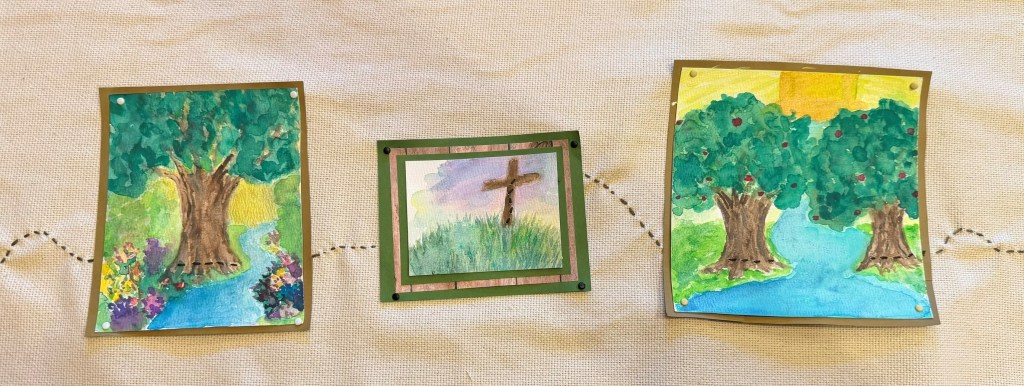
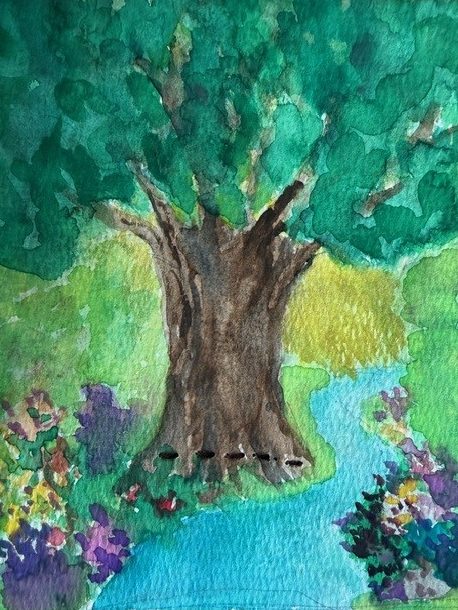
One of my favorite examples is the tree of life. It’s one of those strands of grace that appears at the very beginning and reappears in the final chapter of Revelation when Eden is restored in the New Heaven and the New Earth.
Two trees stood at the center of the garden—the tree of life and the tree of the knowledge of good and evil. Surrounding them were all kinds of trees, pleasing to the eye and good for food. And God gave a clear invitation and a clear boundary.
“You are free to eat from any tree in the garden; but you must not eat from the tree of the knowledge of good and evil, for when you eat from it you will certainly die.” (Genesis 2:16–17)
It’s a story as old as time—literally.
The serpent twisted God’s Word, and what seemed like a small choice shifted everything
Spiritually: Fellowship with God was broken.
Relationally: Blame replaced unity, and conflict entered in.
Emotionally: Fear and hiding took the place of peace and security.
Mentally: Shame and guilt flooded in.
Physically: The ground was cursed—work became toil, and both creation and our bodies were marked by brokenness.
Access to the tree of life was cut off, and the days of humanity were now numbered. Adam and Eve’s world was no longer paradise. The world was now marked by sin where wickedness, selfishness, and brokenness would take root and spread.
In His infinite wisdom, God barred the way to the tree of life. What had once been a perfect world was no longer a place fit for eternal life. To live forever in a fallen world, under the weight of sin and curse, would not be a gift but a tragedy. Even in judgment, there was mercy.
The thread of the tree of life continues as we move through the pages of Scripture. The problem set in motion by Adam and Eve—their choice to eat from the forbidden tree—introduced sin and death into the world and set the stage for what would come next.
“Therefore, just as sin entered the world through one man, and death through sin, and in this way death came to all people, because all sinned.” (Romans 5:12)
The trees in Genesis point ahead to another tree—the one where life would be restored.
On the cross, Jesus paid the penalty for humanity’s sin. It was the great exchange: His death for our life.
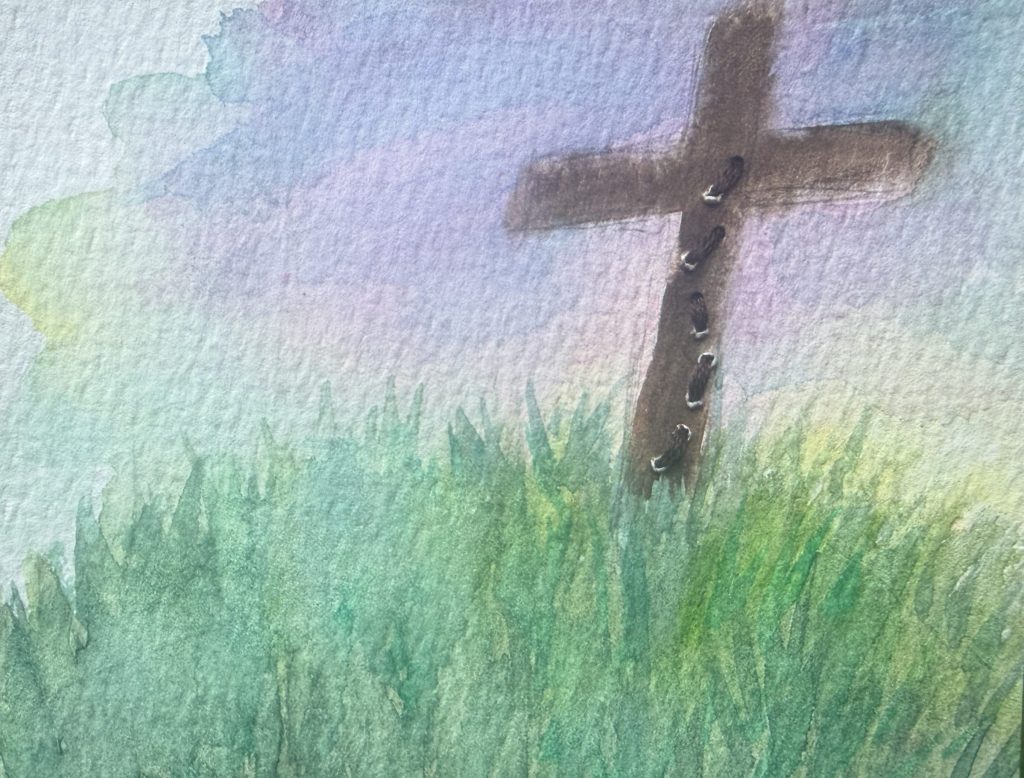
“He himself bore our sins in his body on the tree; so that, having died to sins, we might live for righteousness. By his wounds you have been healed.” (1 Peter 2:24 CSB)
Jesus’ work on the cross made a way for fellowship to be restored and for our eternal destiny to be rewritten. He brings us from death to life as we confess our sin and believe that He died in our place and rose again. When we proclaim His lordship and seek to walk in step with Him, everything changes—not only our eternity, but also the way we live each day here on earth.
As we follow the thread, the tree of life appears in Revelation 22 when Eden is restored in the New Heaven and the New Earth after Satan has been cast into the lake of fire. “Then the angel showed me the river of the water of life, as clear as crystal, flowing from the throne of God and of the Lamb down the middle of the great street of the city. On each side of the river stood the tree of life, bearing twelve crops of fruit, yielding its fruit every month. And the leaves of the tree are for the healing of the nations.” (Revelation 22:1-2)
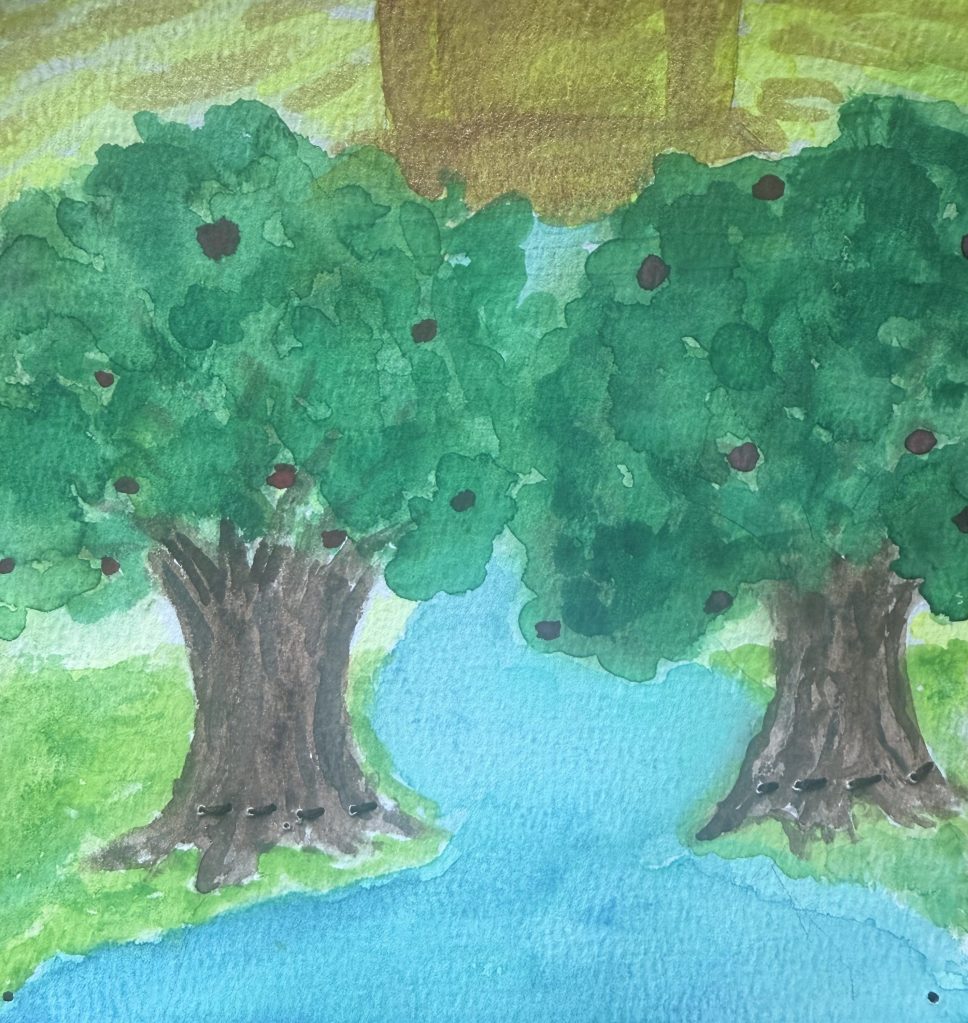
From one tree in the garden to two trees by the river of life, the story comes full circle. What once symbolized lost life now overflows with abundance, access, and healing. Sin, death, and suffering are no more, and eternal life is fully restored. This is only possible because of the One who hung upon the tree—turning an instrument of death into the doorway to life. What was broken in the garden has been fully restored.
The story of Scripture is a story of life lost and life restored. And because of Jesus, we are invited not only into eternal life, but into restored fellowship with God—now and forever.
Next Steps: Application
Spiritual Practices
Read Genesis 1–3, John 18–20, and Revelation 21–22.
Then, go back and read them again—this time with a pen in hand. Take notes. Look for connections. Notice what is lost, what is restored, and what is made new.
Ask God to show you His heart as you read. Pay attention to what stands out, what repeats, and what stirs something in you.
Sit with it. Don’t rush.
Let the beginning, the cross, and the end come together—and ask God to help you see the thread that runs through it all.
Mental Practices
Spend some time thinking about what eternity with the Father, Son, and Holy Spirit will be like.
Life here on earth is marked by sin, sadness, and suffering—but can you begin to imagine what life will be like in glory? What will it feel like to live in a world untouched by sin, filled with abundance, peace, and the presence of God?
Take time to dream. Picture the New Heaven and the New Earth.
What will it be like to be fully known and fully whole?
To experience joy without interruption?
To walk in perfect fellowship with God?
Sit with that hope—and let it shape the way you see your life today.
Emotional Practices
Lay it down and receive life.
Name what feels heavy, weary, or dead in your life.
Picture yourself placing it at the foot of the cross.
Sit with open hands.
And receive what God gives instead.
Relational Practices
Genesis 1–2 depicts unbroken fellowship between God and humanity. But from Genesis 3 through Revelation 20, the story is marked by brokenness. In its wake come strife, blame, pride, selfishness, fear, insecurity, slander, dishonesty, and withdrawal. At its core, sin fractures our relationship with God—and with one another.
So here is a relational practice for today:
Ask God if there is a relationship in your life that needs movement toward restoration. Is there someone where things feel strained, distant, guarded, or simply not what they could be?
What is one step you can take?
It may be a conversation, an apology, an act of kindness, or a willingness to forgive. Their response is not yours to control—but your obedience is.
Ask God what He is inviting you to do, and then take that step.
Physical Practices
We often read about Adam and Eve eating from the tree of the knowledge of good and evil, but there is something powerful about using your body to experience a spiritual truth.
Take a piece of fruit and your Bible, and go somewhere quiet where you won’t be interrupted. As you slowly eat the fruit, read Genesis 1–3. Taste it. Let the moment slow you down.
Reflect on the story. Consider the weight of disobedience and the cost of what was lost. Then turn your thoughts to the greater story—the sacrifice Jesus made for a disobedient humanity.
Meditate on what it means that we are no longer barred from life, but invited back into it.
As you finish, ask God to deepen your awareness—to give you a greater appreciation for His mercy, His response to our rebellion, and the life He now offers through Christ.

Leave a Reply